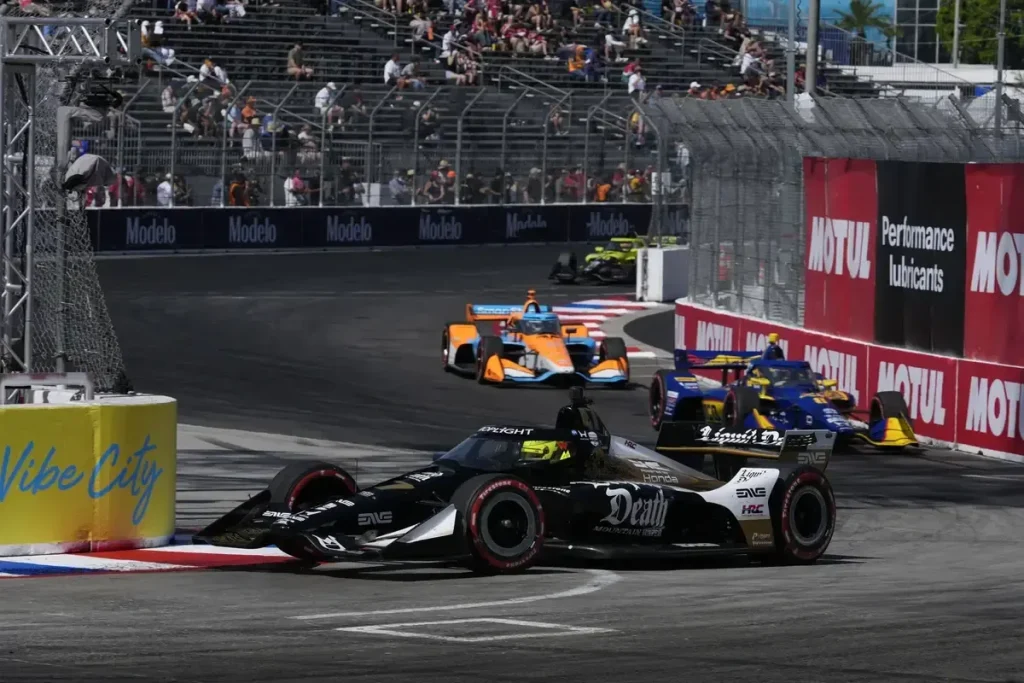
At a glance
- Drivers can use Push to Pass on road- and street-course restarts once green is displayed and they have crossed the alternate start-finish line. The permission comes from IndyCar’s May 2026 update.
- Passing before the restart line remains prohibited, even when the boost is available.
- Total usage time and the maximum duration of each push remain unchanged.
In this article
IndyCar’s May 5, 2026 announcement opened Push to Pass to race restarts, beginning with the Indianapolis Motor Speedway road-course events. The change applies to the NTT INDYCAR SERIES and INDY NXT by Firestone at road and street races, giving drivers access to the extra boost during a phase previously excluded from its permitted use.
When drivers can press the button
The activation conditions are the green flag and the car’s passage across the alternate start-finish line. In its official announcement, IndyCar described availability after that crossing following the start and explicitly extended permission to restarts.
That also distinguishes a restart from the initial race start: the announcement does not grant permission to use the system on the approach to the opening green. Its initial availability begins after the stated line crossing and green-flag conditions have been satisfied. The update covers the Indianapolis road-course events and subsequent road and street races; it is not an announcement of an oval procedure.
Related posts
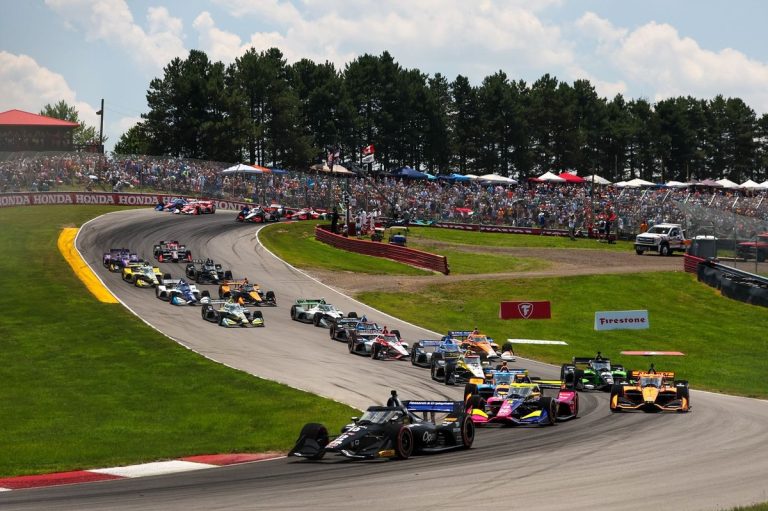

Extra boost does not move the passing line
The restart line still governs when a driver may overtake. IndyCar retained the prohibition on passing before that line, so access to the button cannot be treated as permission to complete an earlier pass. Drivers must observe that restriction independently of the system’s availability.
Push to Pass delivers roughly 60 additional horsepower by increasing turbocharger boost under the driver’s control. The change expands when that performance can be requested, while preserving the existing timing parameters. Both the overall time allowance and the maximum time for an individual push remain in place: restart access does not provide an unlimited supply of boost.
Why saving boost could matter more
The strategic question is how much of that allowance to keep for a later restart. In Kickin’ The Tires’ May 7 report, Kyle Kirkwood anticipated drivers becoming more conservative with usage on in-and-out laps and during earlier overtaking attempts. His concern was having boost available when rivals could deploy theirs at a restart.
David Malukas offered a more restrained assessment. He suggested that reacting faster with the button, or encountering wheelspin on cold tyres, might create an opportunity, but expected the overall effect to be limited because everyone received the same permission. Those were expectations ahead of the change’s introduction, rather than evidence of its eventual racing impact.
Why IndyCar changed the rule
INDYCAR President J. Douglas Boles said the Push to Pass software failure at Long Beach prompted a broader review of the system’s rules, including whether to leave it available on restarts. The resulting May announcement made that availability an explicit procedural change, with the existing passing restriction and usage limits retained.
Related reading: IndyCar caution rules: how emergency service operates when pits are closed.
Image credit: Representative image. · Source: readmotorsport.com · Modifications: Optimized to WebP; earlier source editing history is unverified · Image source