In this article
What Engine Displacement Means in MotoGP
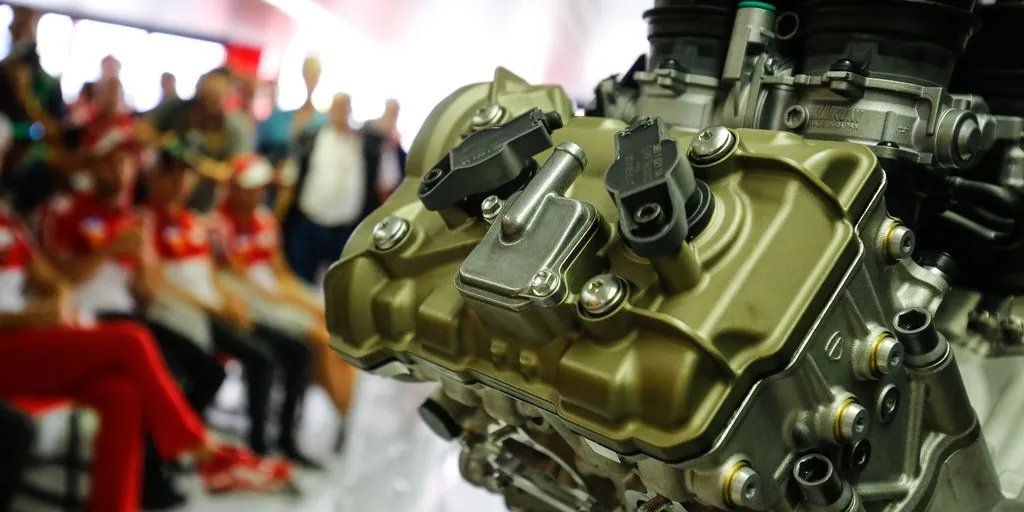
Defined more generally, a motorcycle engine's displacement measures the combined volume of its cylinders, representing the cubic space that the pistons sweep in one stroke. In the premier class of Grand Prix motorcycle racing, regulations cap this volume at a maximum of 1000cc. Displacement indicates the volume of air and fuel pushed through the combustion chambers during operation, directly establishing how much fuel-air mixture can burn in a single cycle to generate power.
Calculating displacement relies on two physical dimensions across each cylinder: bore and stroke. Bore measures the internal cylinder diameter, while stroke represents the distance the piston travels along the cylinder during a crankshaft cycle. Multiplying the piston cross-sectional area by stroke length and the number of cylinders yields overall capacity, typically calculated from millimetre dimensions into cubic centimetres.
Premier Class Technical Limits and Power Output
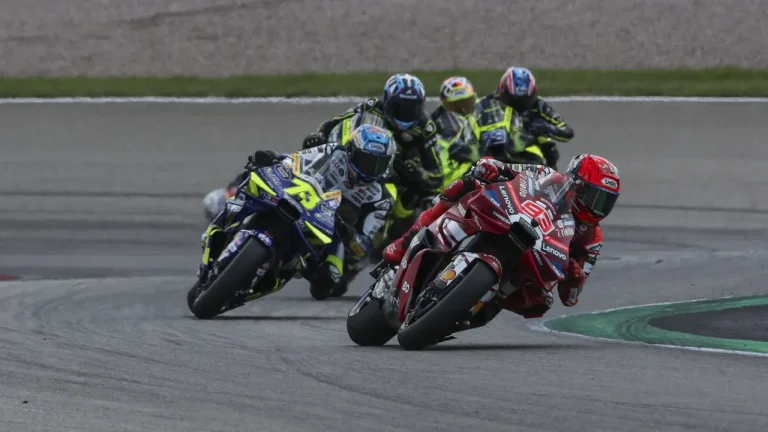
Current premier class regulations enforce strict boundaries on engine architecture. Prototypes must run four-cylinder engines with a maximum displacement of 1000cc and a maximum cylinder bore of 81 millimetres. Power travels through a transmission restricted to six gears. These engines generate approximately 250 horsepower, achieving high straight-line marks including a World Championship top speed record of 366.1 km/h.
Engine durability rules accompany these geometric limits. Each manufacturer must homologate its chosen engine specification before the season begins. A standard allocation permits each rider a maximum of seven engines per championship season. Selected manufacturers qualify for extra engine allowances and continued development freedom under the concession framework to balance grid competition.
How Displacement and Configuration Shape Performance
A larger displacement indicates greater potential power, yet higher capacity alone does not guarantee a faster motorcycle. Both engine size and configuration impact crankshaft revolutions per minute, torque delivered from turning the throttle, and horsepower based on how effectively and often torque is applied. Higher horsepower can mean higher acceleration and top speeds, as examined in our guide on top speeds and records in Grand Prix racing.
Riders and teams are not only concerned about the sheer acceleration, top speeds, and power they can get from their bikes. Race engineers and riders adjust aerodynamic packages, suspension setups, cornering speed, tyre selection, tyre wear rates, and chassis weight distribution. Lap performance also depends heavily on customised electronic maps, fuel consumption constraints, throttle power delivery characteristics, race strategy, and individual rider execution.
Related posts
Displacement Across Moto2 and Moto3 Categories
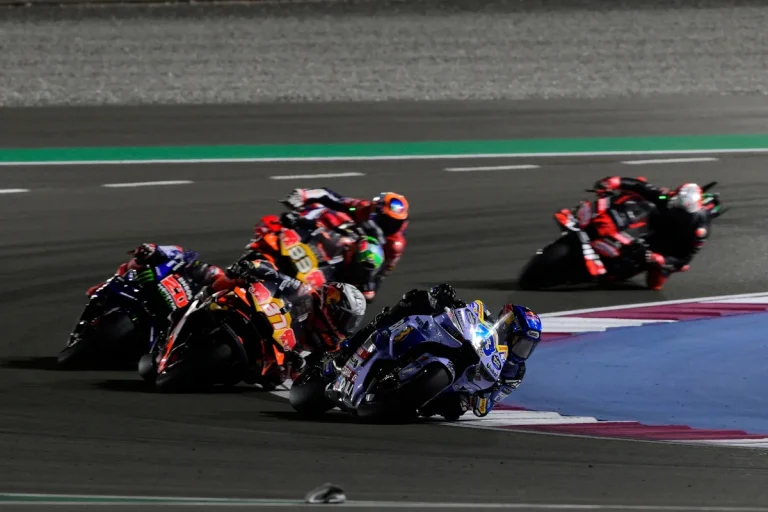
Grand Prix racing structures its ladder using tiered displacement rules. The intermediate Moto2 class replaced 250cc machinery in 2010. Moto2 uses spec 765cc four-stroke three-cylinder engines supplied by Triumph, paired with a six-speed gearbox. Teams design or source distinct chassis, brakes, and suspension units. These prototypes produce 138 horsepower, require a 217-kilogram minimum combined bike and rider weight, and reach 301.8 km/h.
The lightweight Moto3 category introduced 250cc single-cylinder four-stroke engines in 2012, replacing historic 125cc two-stroke bikes. Producing approximately 60 horsepower through a six-speed transmission, Moto3 bikes adhere to a 152-kilogram minimum combined weight threshold and achieve top speeds of 245 km/h. This progression allows younger riders to develop racecraft on lighter machinery before earning promotion to heavier, more powerful classes.
Historical Shifts in Premier Class Engine Eras
Premier class displacement has shifted repeatedly since the World Championship began in 1949. For over five decades, regulations set the maximum displacement at 500cc. Four-stroke powerplants dominated competition during the 1950s and 1960s. During the 1970s, two-stroke engines gained dominance, creating the ferocious 500cc machinery that defined the 1980s and 1990s. The final 500cc two-stroke engines generated around 190 horsepower.
In 2002, organizers raised the maximum limit to 990cc, initiating the modern four-stroke MotoGP era. Manufacturers initially could enter 500cc two-stroke or 990cc four-stroke motorcycles, until the 2003 Czech Grand Prix concluded two-stroke participation. The 990cc powerplants produced close to 230 horsepower, utilizing electronic engine control units, electronic fuel injection, traction control, engine braking management, and anti-wheelie systems.
The championship lowered maximum capacity to 800cc between 2007 and 2011 to curb top speeds for safety. Manufacturers engineered bespoke electronics architectures with large specialist teams, deploying launch control alongside refined traction management to tame 230-horsepower engines. In 2012, regulations raised displacement back to 1000cc to increase torque and facilitate overtaking, later mandating unified electronic control software in 2016.
The 2027 Regulatory Transition to 850cc
A major technical reset arrives in 2027, reducing maximum premier class displacement from 1000cc to 850cc. This in turn will reduce top speeds, making racing safer, and will increase mileage for greater efficiency and sustainability. Maximum cylinder bore will shrink from 81 millimetres to 75 millimetres, intended to increase road relevance while retaining distinctive Grand Prix racing characteristics.
The 2027 framework also curtails the standard engine allocation from seven units down to six per rider across the season. Accompanying these displacement and bore revisions are significant rule changes covering aerodynamics, concessions, fuel, GPS data, and holeshot and ride-height devices.