In this article
Ferrari squandered a major opportunity to claim victory in Mexico, failing to convert the front-running pace demonstrated by its updated SF-26 into a race win. The Maranello squad started strongly from the opening free practice sessions with a solid baseline setup that needed few adjustments, confirming the development progress first seen at Austin. Unlike previous qualifying sessions, Ferrari did not falter at the decisive moment, comfortably getting tyres into the operating window with Lewis Hamilton despite low grip and thin altitude air. Once Charles Leclerc secured the race lead, he had the pace to pull away from Max Verstappen, aided by clean air and the initial performance of soft tyres compared to the medium compound on the Red Bull.
Opening-Lap Duel Compromises Track Position
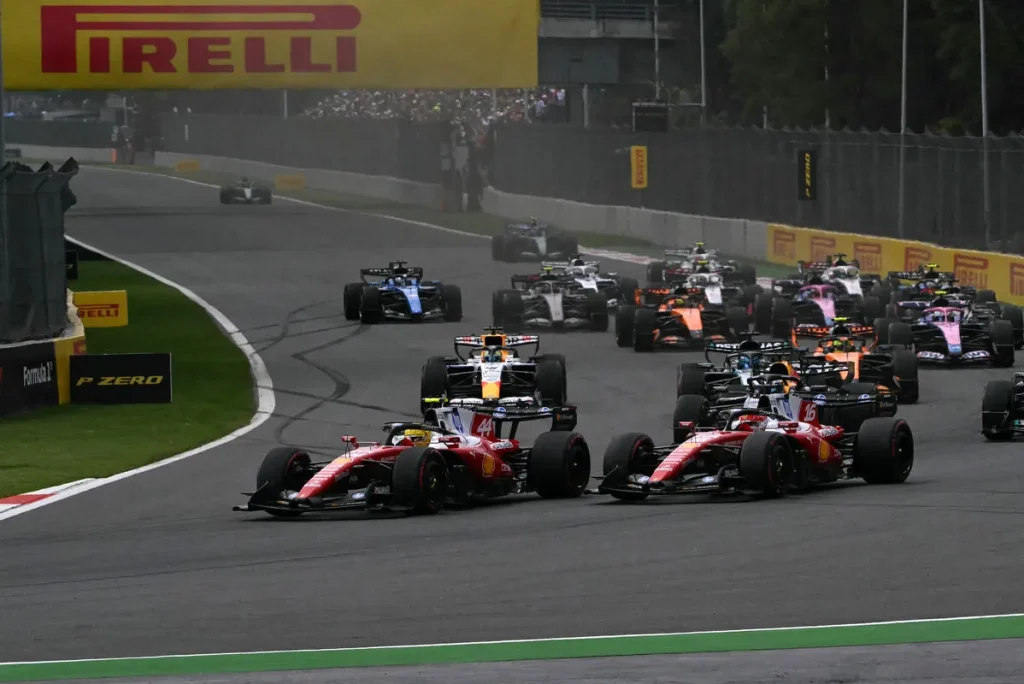
The team's commanding position unravelled through mistakes and an internal fight between Charles Leclerc and Lewis Hamilton, on a track described as offering no way to rectify errors. Exiting the opening chicane at the front of the field, the advantage lasted only briefly before both Ferrari drivers attempted to outbrake each other into the next corner, driving as though sea-level grip were available. Rejoining the track, Hamilton surrendered position to Verstappen, while Leclerc was handed a five-second time penalty. Running in clean air, Leclerc did not have to manage temperatures like the pursuing cars and had the opportunity to offset the penalty. The Monegasque driver built a five-second margin over Verstappen, but the gap then stabilized as Red Bull's medium tyres began to outperform Ferrari's softs and Verstappen suffered less from dirty air.
Related posts
Traffic and Slower Pit Stop Cost the Lead
Ferrari still had an opportunity to contest the lead during the pit window, which opened when Oscar Piastri pitted and cleared track behind the frontrunners. Had Leclerc remained on circuit, Verstappen was poised to stop and use fresh tyres to jump ahead. On his in-lap, Leclerc was hindered by the lapped car of Valtteri Bottas through the winding esses of the second sector, shedding valuable tenths of a second. A slower tyre change compared to Red Bull's pit service ultimately sealed the position change, allowing Verstappen to emerge ahead of Leclerc out of the pit lane.
Standing Restart and Straightline Speed Limits
Once track position was lost, Ferrari had limited recourse despite possessing competitive pace. A standing restart offered the best opportunity, but Leclerc launched from the dirty side of the grid where tyre marbles had accumulated during the opening phase. Hamilton moved ahead and utilized overtake mode over several laps, though the system proved ineffective in Mexico. In the rarefied air, reduced aerodynamic drag allowed cars to reach 360 km/h on the main straight, but the supplementary electrical output of overtake mode progressively declined until vanishing around 340 km/h. Running behind another car caused rapid overheating of brakes and power units in the thin air, forcing drivers into intensive lift-and-coast to manage temperatures without fully exploiting the slipstream. Despite those handicaps, Hamilton followed Verstappen closely for an extended period, demonstrating the underlying pace of the SF-26. Leclerc's slower pace was unrepresentative, caused by a severe front flat-spot that dangerously exposed the internal tyre carcass.
Technical Progress with the SF-26 Package
Technical indicators offered genuine encouragement alongside Maranello's disappointment. The Ferrari power unit adapted effectively to the thin air, mitigating low-rev power drop-offs thanks to a smaller turbo. The SF-26 also displayed balanced handling and strong grip through slow corners, addressing the rear traction weaknesses that had surfaced at Baku and Singapore. Following initial positive signs at Austin, Mexico confirmed that recent updates have widened the operational window of the car.
Rival Performance Across the Field
Red Bull capitalized on Ferrari's missteps through clinical, opportunistic driving from Verstappen. The RB22 handled both starts well after clutch concerns in Austin, though it suffered tyre overheating in the final sector and drew complaints from Verstappen regarding unpredictable engine braking. Mercedes secured another podium through Kimi Antonelli's tyre management on soft tyres, while George Russell was hampered by an opening clash with Isack Hadjar, an ensuing penalty, and straightline electrical power delivery problems. McLaren's MCL40 proved resilient during prolonged traffic running with Lando Norris without overheating, highlighting how close margins across the field amplify costly operational blunders.