
In the FIA World Rally Championship (WRC), tyre marking is the official inspection and logging process used by scrutineers to track tyre allocations, enforce sporting limits, and prevent teams from running unauthorised compounds. Every competition tyre fitted to a four-wheel-drive car must be supplied by the designated tyre partner—Hankook for 2026. Scrutineers verify individual tyres at designated checkpoints before cars leave service areas, ensuring teams comply with strict event quotas and allocation rules.
Embedded RFID Tags and Barcode Registration
Tracking begins during manufacturing before the tyres ever reach the stages. FIA regulations require every four-wheel-drive competition tyre to feature an approved permanent Radio Frequency Identification (RFID) tag embedded directly into the tyre structure before moulding and vulcanisation.
Tyres also carry unique barcodes. Prior to pre-rally scrutineering, the nominated tyre supplier provides the FIA with a barcode list established under FIA oversight. For P1 drivers, each tyre is formally registered to a driver's car, and they may only use tyres assigned to their entry. For Junior WRC entrants, the tyre company must similarly provide the complete list of barcodes to the FIA Technical Delegate before competition begins.
Related posts

World Rally Championship
WRC Lost Pace Notes: How Rally Crews Cope When Stage Notes Go Missing
Rally Stages & Rules
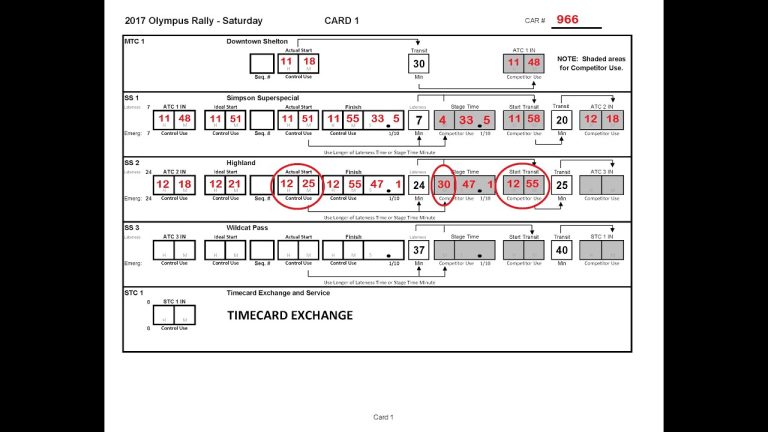
Rally Time Cards: What Co-Drivers Hand to Officials
Marking Zones and Checkpoint Procedures
Physical checks occur at dedicated tyre marking zones situated at the exit of service parks, Tyre Fitting Zones (TFZs), and Remote Service Zones (RSZs). These stations are equipped to scan both barcodes and RFID chips as cars depart for the competitive road sections.
For the sole purpose of assisting the tyre marking, barcode, or RFID reading procedure, one team member per crew is permitted into the marking zone at service park and tyre zone exits. A modified procedure applies during shakedown: the marking zone is placed inside the Technical Zone between the time control and the shakedown start, where team assistants are not permitted.
Stage Monitoring and Stewards Enforcement
Officials may conduct conformity checks at any point during a rally to confirm that tyres match registered barcodes and meet all technical standards. In addition, authorised representatives of the tyre manufacturer may be present at stage stop points to inspect condition and collect tyre operating data.
Wheel management is tightly restricted elsewhere along the route: complete wheels can only be loaded or removed in service parks or designated tyre change areas, and any spare wheels taken on during service must remain with the car until the next authorised zone. While non-registered pattern tyres from the official supplier are permitted on road liaison sections, any use of non-conforming or unregistered tyres on special stages is reported directly to the event Stewards for formal sanctions.
Sources: https://www.fia.com/system/files/documents/wrc_2026_sr_version_13_january_2026.pdf.