Skip to content
Wrong Apex Racing, explained through data
CircuitsDriversF1 ExplainedF1 NewsHistoryRace AnalysisTeamsTechnology
More
  • Endurance & GT Racing
  • Formula E
  • IndyCar
  • MotoGP
  • Motorsport Esports
  • NASCAR
  • Rally
  • WorldSBK
Home›F1 News›Mazda RX-500: The 1970 Rotary Concept Claiming a 15,000 RPM Redline

F1 News ·

Mazda RX-500: The 1970 Rotary Concept Claiming a 15,000 RPM Redline

Wrong Apex Editorial DeskPublished 2026-10-30

In this story

Category

F1 News

Also in

Engines & Power UnitsHistoryIconic Cars

Related articles

F1 Drivers Expect Qatar Safety Talks Following MotoGP Middle East DiscussionsHow Data Analytics Shapes Modern Formula 1 Race StrategyAudi Under FIA Investigation After Slater FP1 Cooling Fan Incident in Mexico
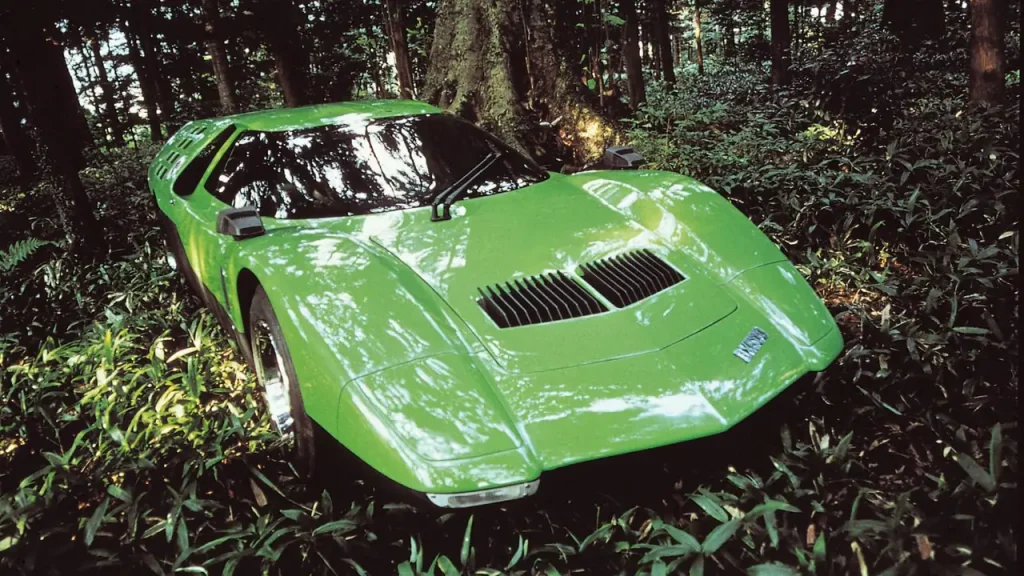
A green Mazda RX-500 concept car parked among foliage in a wooded area.
Photo details Illustrative image: A green Mazda RX-500 concept car parked among foliage in a wooded area. Source: Image source
fShare on Facebook𝕏Share on XShare on Reddit
In this article
  • Aerodynamic Packaging and Chassis Architecture
  • Design Evolution and Multi-Stage Lighting
  • Rotary Powertrain and Performance Targets
  • Toy Immortality and Modern Demonstration

Mazda introduced the RX-500 concept car in 1970, showcasing a radical design language and promoting a claimed 15,000 rpm redline that would have exceeded contemporary Formula 1 engine speeds. The vehicle debuted only ten years after the Hiroshima manufacturer launched its first passenger car, the 1960 R360, following its beginnings in 1920 as Toyo Cork Kogyo Corporation making corks and machine tools, and its first combustion three-wheeled pickup in 1931. After introducing the Wankel rotary-powered Cosmo in 1967, Mazda conceived the RX-500 as an ambitious mid-engine concept.

Aerodynamic Packaging and Chassis Architecture

Conceived in 1968 under the internal codename X810, the RX-500 was originally intended to explore a successor to the Cosmo Sport while testing how plastic body panels performed at speeds exceeding 125 mph. Design work concentrated on minimizing aerodynamic drag, creating a pointed nose, a low hood, and a Kammback rear reminiscent of the boxy Ferrari 250 GT SWB Breadvan tail. The vehicle utilized a tubular steel space frame beneath panels constructed from a blend of fiberglass and ABS plastic. Chassis components included double-wishbone suspension at each corner, front-hinged butterfly doors, and a mid-mounted engine bay with packaging compact enough to fit a full-size spare wheel.

Related posts
F1 News

F1 Drivers Expect Qatar Safety Talks Following MotoGP Middle East Discussions

30 Oct 2026

F1 News

How Data Analytics Shapes Modern Formula 1 Race Strategy

30 Oct 2026

Design Evolution and Multi-Stage Lighting

Mazda assembled a single RX-500 concept, altering its visual configuration across different appearances. Originally photographed in green with pop-up headlights, it was repainted yellow for its Tokyo Motor Show debut before a damaged headlight mechanism led technicians to install fixed lighting, followed by a final silver finish on the exhibition tour. The tail featured multi-colored vertical arcs of lights, intended to show green during normal driving, yellow for turn signals, three red stages for varying braking intensity, and white for reversing. Inside, molded bucket seats finished in orange and green accompanied a matching four-spoke steering wheel and three semi-circular gauges displaying a 15,000 rpm tachometer, a speedometer, and a radio frequency readout.

Rotary Powertrain and Performance Targets

Unlike non-operational design studies, the 1,874-pound RX-500 featured a functional drivetrain with a four-speed manual transmission driving the rear wheels. Mazda initially announced a twin-rotor 1,146cc 12A engine before fitting a 982cc 10A unit during its initial display run. Mazda aimed for 247 horsepower or more alongside the 15,000 rpm redline for a production iteration, though reaching those targets for a street vehicle represented a lofty ambition; by comparison, Chevron B16 sports cars racing at Le Mans in 1970 produced around 200 horsepower at 8,000 rpm using tuned 10A rotary engines. Stopping was handled by four-wheel disc brakes with four-piston calipers, while crews fitted 15-inch steel wheels in place of the static aluminum show wheels when the car was driven.

Toy Immortality and Modern Demonstration

The 1973 oil crisis ultimately eliminated any prospect of a production model, but the RX-500 achieved broad recognition in miniature form when Matchbox released it in 1971 as the MB66, later reissuing the casting as the Streaker. In 2008, Mazda completed a sympathetic restoration to address rotted foam, deteriorating upholstery, damaged door bases, and worn steering wheel stitching while keeping the vehicle authentic and functional. Today, the car is exhibited at the Hiroshima City Transportation Museum, where it remains in operating condition following a low-speed demonstration drive conducted in a parking area in October 2026.

Sources: Mazda's One-Off Rotary-Powered Supercar Revved Higher Than A Formula 1 Car.
fShare on Facebook𝕏Share on XShare on Reddit

Related posts

F1 News

F1 Drivers Expect Qatar Safety Talks Following MotoGP Middle East Discussions

30 Oct 2026

F1 News

How Data Analytics Shapes Modern Formula 1 Race Strategy

30 Oct 2026

F1 News

Audi Under FIA Investigation After Slater FP1 Cooling Fan Incident in Mexico

30 Oct 2026

Upcoming races

2026 Formula 1 race weekends
Grand PrixWeekend
Mexico City GP30 Oct–1 Nov
São Paulo GP6–8 Nov
Las Vegas GP19–21 Nov

2026 calendar · Snapshot 17 Oct 2026

Full F1 calendar →

Championship snapshot

Standings

Season 2026 · Round 15

Drivers

Points
  1. 1Kimi AntonelliMercedes302
  2. 2George RussellMercedes236
  3. 3Lewis HamiltonFerrari199
  4. 4Lando NorrisMcLaren186
  5. 5Charles LeclercFerrari179
  6. 6Max VerstappenRed Bull Racing163
  7. 7Oscar PiastriMcLaren120
  8. 8Isack HadjarRed Bull Racing86
  9. 9Liam LawsonRacing Bulls59
  10. 10Pierre GaslyAlpine41

Constructors

Points
  1. 1Mercedes538
  2. 2Ferrari378
  3. 3McLaren306
  4. 4Red Bull Racing263
  5. 5Racing Bulls83
  6. 6Alpine68
  7. 7Haas F1 Team27
  8. 8Audi17
  9. 9Williams12
  10. 10Aston Martin3

Snapshot: 2026-09-30 01:26 UTC

Driver standings sourceConstructor standings source

Dated snapshot; not a live timing feed.

Latest articles

Endurance & GT Racing

Tilley and Keen Secure 300 km Algarve Sports Cars Pole in Chevron B19

30 Oct 2026

Aerodynamics

Ferrari’s SF-26 Macarena Wing: Active Aero and Blown Diffuser Mechanics

30 Oct 2026

F1 News

F1 Drivers Expect Qatar Safety Talks Following MotoGP Middle East Discussions

30 Oct 2026

F1 News

How Data Analytics Shapes Modern Formula 1 Race Strategy

30 Oct 2026

F1 News

Audi Under FIA Investigation After Slater FP1 Cooling Fan Incident in Mexico

30 Oct 2026
Wrong Apex

Motorsport, explained through data. Dated snapshots, sourced methods, and original analysis.

BrowseDriversHistoryRace analysis
More motorsportFormula EIndyCarMotoGPMotorsport EsportsNASCARRallyEndurance & GT RacingWorldSBK
About Wrong Apex

Publisher contact: Dean. Sources and calculation notes accompany data graphics. info@wrongapex.com

AboutContactEditorial standards and correctionsPrivacy policyAdvertising disclosureTerms of use

Explore the topic

Formula 1

Related posts · open in a new tab

  • How Data Analytics Shapes Modern Formula 1 Race Strategy ↗
  • Audi Under FIA Investigation After Slater FP1 Cooling Fan Incident in Mexico ↗
  • Alonso Criticises F1 Backmarker Standards Following Albon Austin Clash ↗
Browse Formula 1 →