
In this article
Circuit Location and High-Altitude Environment
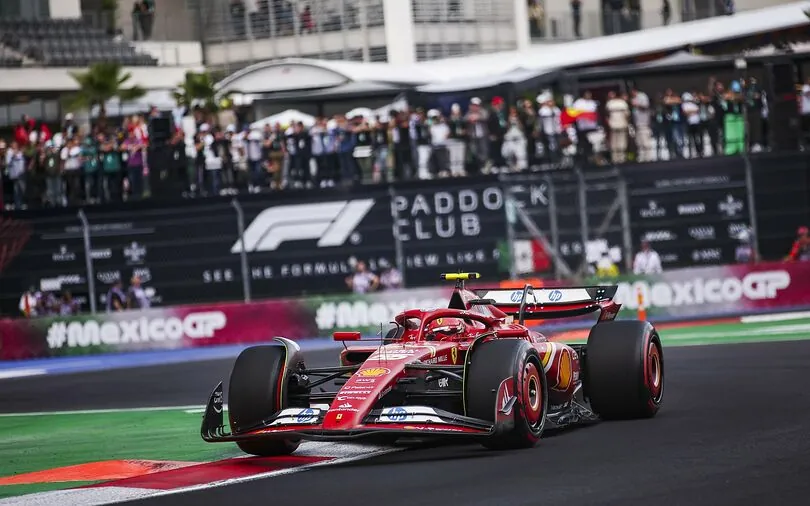
The Autódromo Hermanos Rodríguez is situated in the Mexican capital at an elevation of approximately 2,240 metres above sea level. The circuit measures 4.304 kilometres in length, with the Grand Prix scheduled to run for 71 laps, covering a total distance of 305.354 kilometres. Serving as the second round of the Americas triple-header, the venue provides an event with rich motorsport history stretching back more than six decades.
Aerodynamic Balance in Thinner Atmospheric Conditions
At approximately 2,240 metres above sea level, the circuit exposes teams to thinner air, reducing aerodynamic drag but also limiting downforce. The venue's mix of high altitude, long straights and technical corners makes it difficult to predict which team will have the strongest package. Performance depends on aerodynamic efficiency, power-unit operation, cooling, tyre management and the ability to find a consistent balance across different parts of the lap.
Power-Unit Demands and Cooling Difficulties
The circuit's altitude creates demanding conditions in which turbocharged power units must operate, while cooling becomes more difficult. The track provides a unique test of car performance, tyre management and energy deployment across the weekend. Readers interested in powertrain design can see how modern power unit energy systems work for broader technical context.
Main Straight Overtaking and Braking Zones
The long main straight at the venue offers a major overtaking opportunity as drivers accelerate toward the heavy braking zone for Turn 1. Further background on layout dynamics appears in what circuit features create overtaking opportunities. The modern track layout combines this high-speed straight with slower, technical corners, retaining the venue's distinctive character while incorporating safety modifications made throughout its history.
The Stadium Section and Circuit Alterations
The final sector takes the cars through the famous stadium section, where surrounding grandstands create one of the most atmospheric settings in Formula 1, accompanied by passionate crowds. The circuit has undergone several changes throughout its history. Its original layout featured the fast Peraltada corner, but later modifications altered the circuit and improved safety while retaining its distinctive character.
Related posts
Circuit Guides
Monaco Grand Prix Circuit Guide: What to Watch For
Corners & Track Layouts
Monza Circuit Layout: Braking Zones, Straights and Lap Time
The 1962 Inaugural Event and Early Tragedy
The Mexican Grand Prix first took place on 4 November 1962 at the Magdalena Mixhuca circuit, which was built within a park in Mexico City. The inaugural event was a non-championship race, won by Jim Clark after he took over the car of Lotus team-mate Trevor Taylor. That weekend was also marked by tragedy when Mexican driver Ricardo Rodríguez was killed during practice, aged just 20.
Circuit Dedication and Honda's Maiden Victory
The circuit was later named Autódromo Hermanos Rodríguez in honour of Ricardo and his older brother Pedro, who also became a prominent Formula 1 driver before his death in a sportscar race in 1971. The race became part of the Formula 1 World Championship in 1963, when Clark won the first championship edition. In 1965, Richie Ginther achieved Honda's first Formula 1 victory in Mexico.
Calendar Departures and the 1986 Revival
The Grand Prix became an important end-of-season fixture, but crowd-control problems contributed to its departure after the 1970 race. Formula 1 returned to the venue in 1986 following circuit modifications and safety improvements, where Gerhard Berger won for Benetton to secure his first Formula 1 victory. The event remained on the calendar until 1992, when concerns about the deteriorating surface and wider city issues contributed to another withdrawal.
The 2015 Return and Mercedes Milestones
It took more than two decades for Formula 1 to return before the Autódromo Hermanos Rodríguez rejoined the calendar in 2015 following extensive redevelopment. Nico Rosberg won that comeback race for Mercedes, beginning a new chapter. Mercedes enjoyed several memorable weekends, with Lewis Hamilton winning in 2016 and 2019. The race also played an important role in title battles, as Hamilton secured his fourth world championship here in 2017 and his fifth in 2018.
Verstappen and Red Bull Racing Records
Max Verstappen is the most successful driver in the history of the Mexico City Grand Prix, having dominated much of that era with victories in 2017, 2018, 2021, 2022 and 2023. Red Bull also leads the constructors' statistics with five wins, reflecting the team's success at a circuit where its cars have often been particularly competitive across different seasons.
Recent Winners and Contract Security
The 2020 race was cancelled because of the COVID-19 pandemic, and when the event returned in 2021, it adopted its current name, the Mexico City Grand Prix. Ferrari's Carlos Sainz won in 2024 before Lando Norris claimed victory in 2025 after securing pole position ahead of Charles Leclerc and Verstappen, with George Russell recording the fastest lap. The Grand Prix is contracted to remain on the calendar through 2028.
Championship Dynamics and 2026 Title Situation
The Mexico City Grand Prix has repeatedly shown that its unusual conditions and demanding layout can produce unpredictable races. The 2026 edition could add another major chapter to the venue's history. Kimi Antonelli arrives after his victory in the United States Grand Prix in Austin, extending his championship lead over George Russell and Lewis Hamilton.
With four further races scheduled after Mexico City, a maximum of 100 points will remain available following this weekend. Antonelli needs only two points to secure the championship, which would make him Formula 1's youngest-ever world champion at age 20. Russell and Hamilton remain mathematically eligible to challenge him, but their chances are extremely slim, while Mercedes has stressed the importance of remaining focused on performance rather than distractions.
Sources: RACE GUIDE: High-altitude challenge awaits Formula 1 at Mexico City.