In this article
Custom Brake Engineering Across the Grid
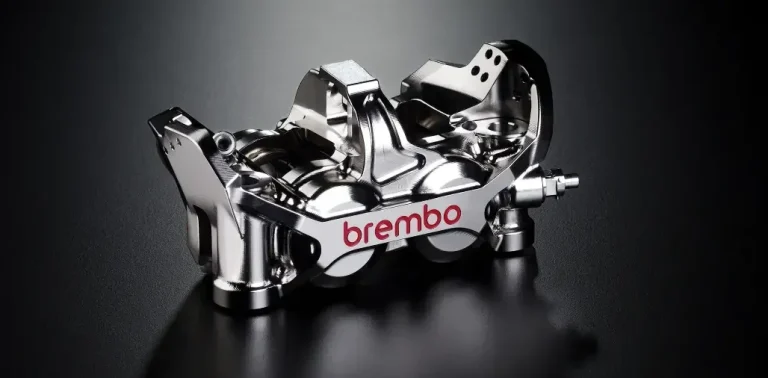
In Formula 1, braking hardware cannot rely on a universal configuration across competing entries. For the 2026 championship, the Brembo Group supplies brake calipers to all eleven teams on the grid while delivering complete braking assemblies to selected outfits. Operating across premier categories like Formula 1 and MotoGP, the Italian supplier manufactures calipers, carbon discs, friction pads, master cylinders, and modern brake-by-wire units tailored to distinct vehicle architectures.
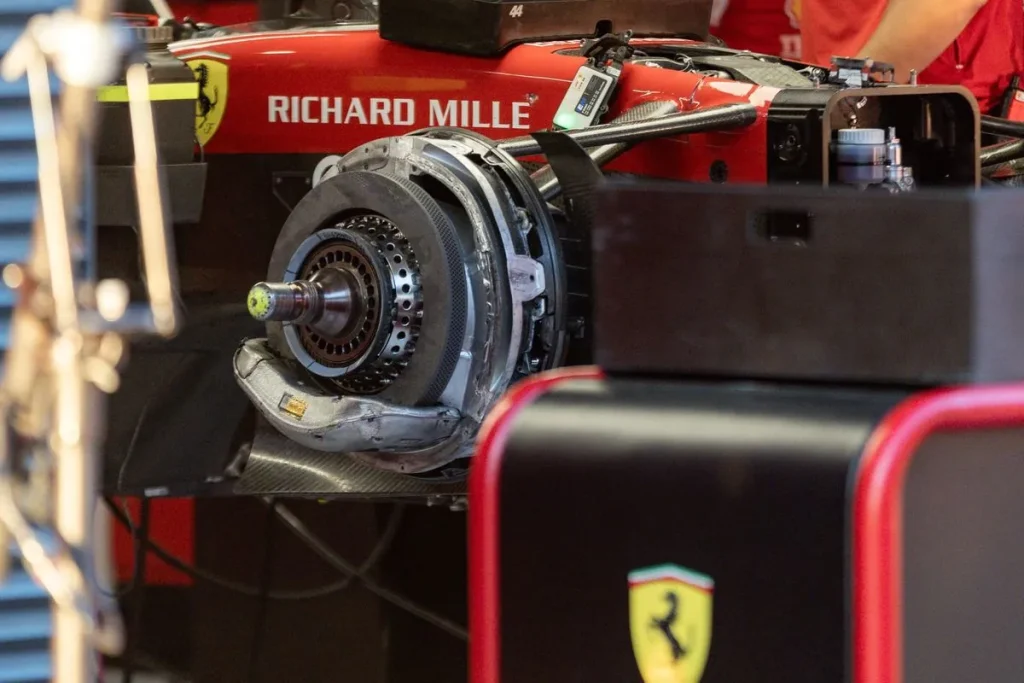
Every squad receives customized hardware because braking hardware interacts directly with external car design. Rather than selling standardized components, engineers adapt geometries to match specific team requests. A side-by-side inspection of all eleven braking layouts reveals noticeable structural divergence. The primary driver of these physical variations is cooling integration, requiring tailored airflow conduits that satisfy both aerodynamic bodywork targets and thermal requirements.
Thermal Management and Caliper Geometry
Caliper architecture differs among teams. For instance, the Mercedes caliper differs entirely from the Red Bull design, which itself departs from Ferrari's solution. Each constructor manages internal wheel heat differently and demands individualized cooling flow around the assembly. Because thermal radiation affects surrounding components and rim temperatures, managing internal wheel heat represents a significant factor in overall track performance.
Altering caliper construction directly dictates friction selection. Discs and pads manufactured from carbon composite must match exact caliper dimensions and clamping profiles. Teams cannot mix incompatible geometries because carbon materials operate in close physical pairing with surrounding housing. For 2026, Brembo introduced specialized caliper arrangements developed to handle those packaging boundaries while preserving structural efficiency under heavy decelerations.
Trackside Support and Operating Thresholds
Brembo embeds two dedicated engineers within each team garage during grand prix meetings. Grand prix weekends afford little opportunity for fundamental component redesigns, focusing instead on optimizing the working environment surrounding installed hardware. Trackside personnel monitor continuous data streams, resolving technical queries and adjusting boundary parameters as cars run across practice sessions.
Engineers concentrate heavily on dissipated energy and working temperatures. Carbon friction material behaves differently across thermal bands, exhibiting altered response at 50 degrees Celsius compared to 500 degrees Celsius. Brembo enforces specific operational limits for carbon components. If observed metrics drift beyond these thresholds, engineers advise the team to intervene, because running outside those limits can lead to losing a bit of performance.
Related posts
Suspension & Brakes
Why F1 brake discs glow red under heavy braking
Suspension & Brakes
F1 Suspension and Brakes: Managing Load Through a Corner
Hydraulic Integrity and Trackside Safety
Trackside tuning mirrors general chassis setup procedures. Beginning Friday morning, engineers examine telemetry to calibrate operating parameters, targeting designated temperatures and dissipated energy levels. This steady calibration ensures braking assemblies remain inside optimal operating windows as track grip and ambient conditions evolve through practice and competitive sessions.
Trackside support can also be a matter of safety sometimes, because a leak in the hydraulic system can lead to an unstoppable car, which is quite dangerous. It happens sometimes that there may be something strange on the braking system, so engineers are present to make sure the car is in a safe condition to run and try to solve the issue if it is not.
Equal Supplier Treatment and Regulation Growth
Despite maintaining an extensive historical alliance with Ferrari supported by monthly engineering meetings, Brembo enforces identical technical support across every client. Established frontrunners such as Mercedes, incoming manufacturers like Audi, and new entrants receive equivalent attention. Regular technical exchanges ensure development proceeds systematically without favoring longstanding partners over customer teams.
With newer outfits, Brembo applies its accumulated experience to sometimes guide teams in the right direction on their braking systems. Grid newcomer Cadillac has utilized Brembo's guidance to navigate complex braking dynamics. Creating an effective system under new regulations presents notable hurdles, making historical data valuable for new organizations striving to establish proper operating procedures across their initial campaigns.
Energy Dissipation Under Vehicle Development
Designing a flawless braking layout from the opening round of a fresh rules cycle is challenging. When new regulations commence, initial car performance sits lower than subsequent iterations. However, foundational brake hardware must be drafted early in vehicle gestation, before teams extract full aerodynamic grip and cornering speeds from their revised platforms.
As car performance increases over time, teams must dissipate more energy into the braking system. Components must therefore tolerate wider operating envelopes than originally required at launch. Supplier hardware has to accommodate these expanding mechanical stresses without suffering structural degradation or premature friction decay.
Driver Collaboration: Senna and Schumacher
Over fifty years in Formula 1, Brembo developed close relationships with several champion drivers. Ayrton Senna valued Brembo brakes while driving for Lotus, prompting McLaren to adopt the Italian hardware shortly after his transfer in 1988. Decades of direct driver feedback shaped hardware refinement, establishing long-term preferences that followed drivers across different constructors.
Michael Schumacher similarly influenced brake development after winning his first championship with Benetton in 1994. Benetton utilized a specialized caliper configuration featuring four pads and eight pistons. Schumacher favored the pedal feel produced by this Brembo hardware, prompting Ferrari to adopt the concept when he switched teams. That collaboration also helped introduce carbon discs and pads to Formula 1 during the late 1990s.
Revived Concepts and Carbon Manufacturing
For 2026, Brembo reintroduced the eight-piston, four-pad caliper concept favoured during Schumacher's era. Although the material has changed a lot since the late 1990s, the concept remains the same. Minimizing mass within the wheel cluster yields vital dynamic advantages, explaining why F1 brake discs glow red under heavy braking as lightweight carbon structures convert massive kinetic energy into intense heat.
Manufacturing processes have evolved alongside material formulations. Brembo relocated carbon disc fabrication directly inside its factory, establishing complete internal control from individual raw carbon fibres through to the final machining of each finished rotor. This vertical integration allows precise oversight across every manufacturing stage, applying decades of accumulated racing knowledge to modern grand prix competition.