In this article
Progression Beyond F1 Academy
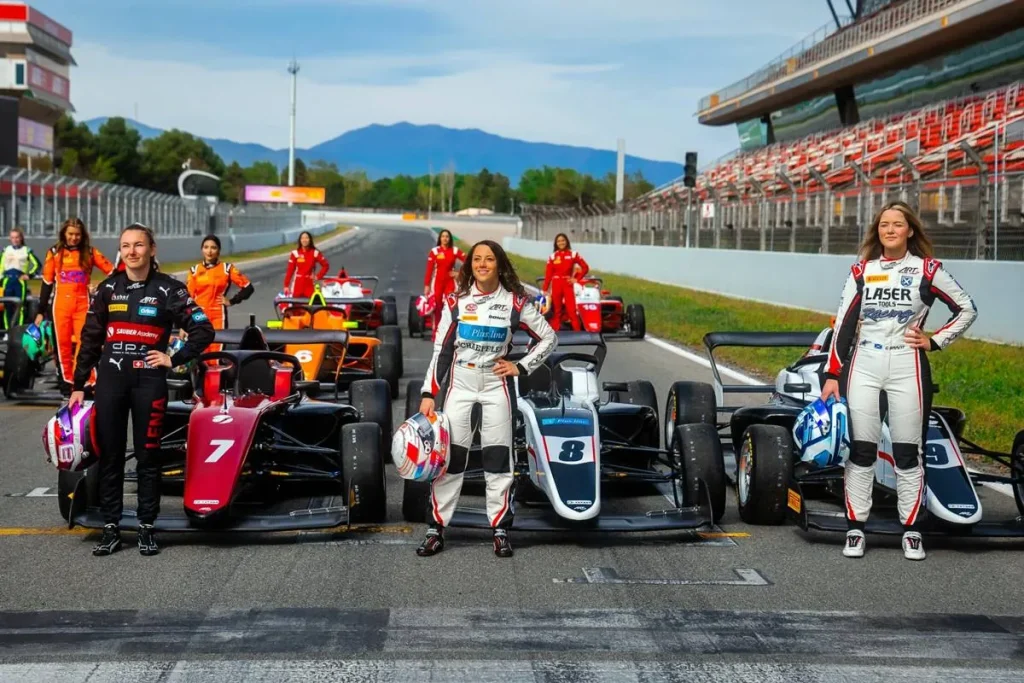
Established in 2023 to advance the development of female drivers in motorsport and prepare them for higher tiers, F1 Academy has expanded female participation under the direct spotlight of Formula 1. While the junior series provides a prominent platform to compete, attract commercial partners, and showcase driving talent before industry personnel, concluding a stint in the championship carries the challenge of securing viable subsequent opportunities. Participation in F1 Academy does not guarantee progression to a race seat in FIA Formula 3, Formula 2, or eventually Formula 1, requiring drivers to forge their own advancement in an environment where ability is essential but not always sufficient on its own.
Alternative Championship Routes
Upon concluding their time in the category, competitors can pursue seats in single-seater championships such as Formula Regional, British Formula 3 (GB3), or FIA Formula 3, alongside alternative disciplines including sports car endurance racing and GT championships. The varied career paths of the series' champions demonstrate that multiple progression trajectories exist rather than a single route. Marta García advanced to the Formula Regional European Championship, Abbi Pulling contested GB3, and Doriane Pin built her ongoing career in endurance racing, illustrating that while F1 Academy serves as an initial launchpad, each driver's subsequent destination hinges on the concrete opportunities they assemble.
Related posts


Escalating Financial Demands
Competing in motorsport involves substantial costs, representing one of the primary hurdles facing drivers seeking to move forward. Each step up entails greater technical demands, more specialized teams, and budgets that can become an obstacle even for competitors with standout results. Securing commercial sponsors, locking down a full season, and finding an organization willing to invest in driver development are part of the contest long before the starting lights go out.
Focus on Professionalization
Commentary published by Chilango argues that discussions surrounding female involvement in motorsport should not be limited to how many women reach F1 Academy or the audience the category achieves, emphasizing the need to examine what happens afterward. The analysis maintains that professionalization represents the genuine change needed in women's motorsport, noting that visibility delivers its true potential when translated into contracts, team tests, development programs, and opportunities to compete at higher levels. While popularity can open doors, long-term careers require investment, preparation, and industry backing alongside proper structures and conditions.
Industry Ecosystem and Career Pathways
The commentary notes that responsibility does not rest solely with the drivers, pointing to teams, sponsors, and organizers as holding the opportunity to build an ecosystem supporting progression beyond a single category. This involves identifying talent, investing in preparation, and establishing alliances that facilitate transitions into other championships, allowing sporting results to outweigh the ability to finance a season. Furthermore, reaching Formula 1 is not the sole measure of success, given that professional motorsport encompasses varied disciplines where a driver can develop a career, win championships, and become an established benchmark. However, if the industry's goal is to expand female presence in premier categories, real routes must exist to attempt that step. Having opened a door and showcased female talent to a global audience, the remaining task is constructing the subsequent path so the category serves as the start of a career rather than its concluding chapter.