In this article
Extreme Operating Demands on Premier Class Tyres
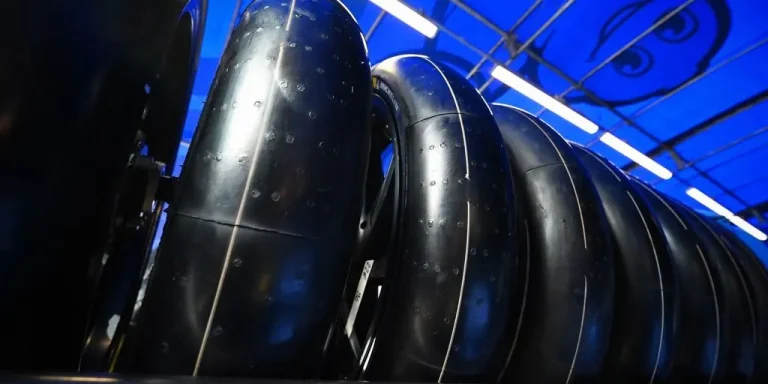
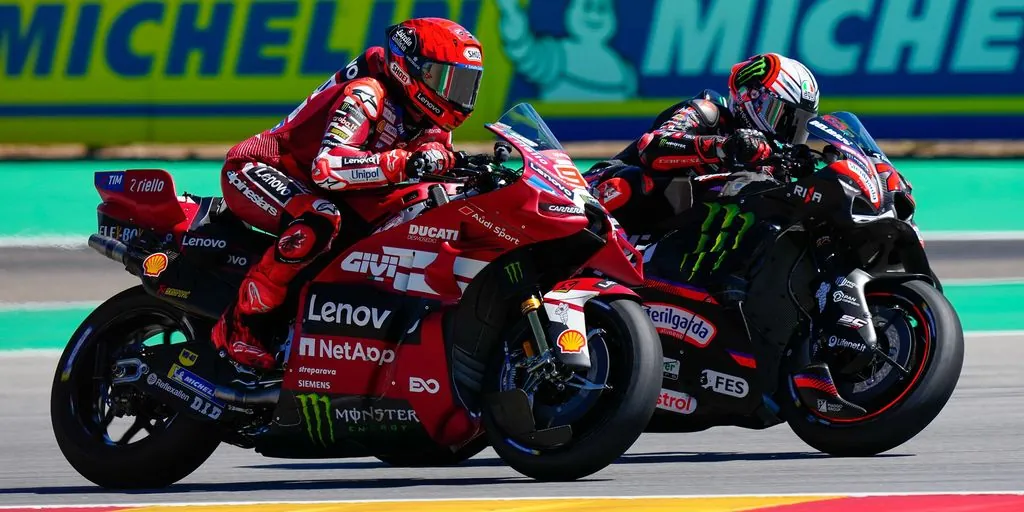
MotoGP tyres are engineered to deliver peak performance during intense 45-minute races at speeds exceeding 360 km/h. Over a race distance of 110 to 120 kilometres, these tyres endure massive acceleration and heavy braking loads generated by 1000cc prototype motorcycles. In addition to handling intense longitudinal forces, the tyres must provide maximum grip while riders lean at extreme angles of up to 64 degrees.
Environmental conditions vary substantially across the Grand Prix calendar, with track surface temperatures ranging from 10°C during autumn at Phillip Island to over 60°C at Losail in Qatar. Designing identical-specification tyres that perform consistently and reliably across these thermal extremes represents one of the most complex engineering challenges in motorsport.
Internal Structural Architecture: The Carcass
The foundation of a MotoGP tyre is its carcass, which serves as the structural skeleton. It consists of a lattice of textile cords—typically made of nylon, polyester, or aramid—that gives the tyre its shape and absorbs racing loads. On the innermost surface, a base sealing layer of rubber makes direct contact with the wheel rim.
Carcass construction is a critical design variable because it dictates how the tyre flexes under load, which directly influences heat generation and handling at the limit. Michelin varies carcass stiffness depending on circuit layout, utilizing a softer carcass for flowing tracks with lower peak loads and a reinforced carcass for venues with heavy braking zones or high lateral stresses, such as the Red Bull Ring and Buriram.
Belt Package and High-Speed Stability
Positioned directly beneath the tread and above the carcass is the belt package, constructed from steel and textile cord belts. This assembly stabilizes the contact patch when the tyre is subjected to extreme dynamic forces. At speeds above 360 km/h, intense centrifugal force attempts to expand the tyre radially outward. The belt package counteracts this expansion, preserving the tyre's shape and keeping the tyre contact patch consistent against the asphalt.
Rubber Compound Chemistry and Thermal Windows
The visible working surface of a MotoGP tyre is the outer rubber compound, which contacts the track and provides the performance distinction between soft, medium, and hard options. Michelin treats its compound formulation as a closely guarded secret, blending rubber, synthetic rubber, silica, carbon black, sulphur, and other elements to achieve specific performance targets.
MotoGP slick tyres are engineered to operate within an optimal temperature window between approximately 80°C and 120°C. Before bikes enter the track, tyres are pre-heated to 90°C using electric tyre warmers. Under full racing conditions, front tyres typically exceed 100°C, while rear tyres can exceed 120°C due to higher driving torque and braking loads.
Related posts
Asymmetric Tread Design for Unbalanced Circuits
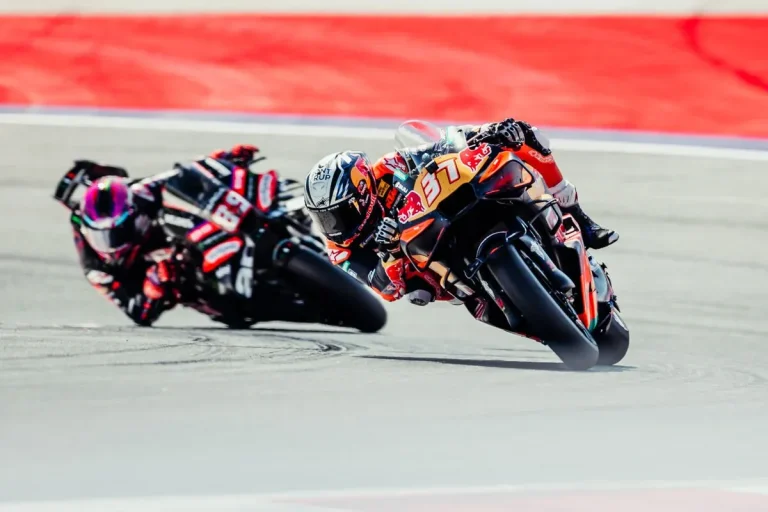
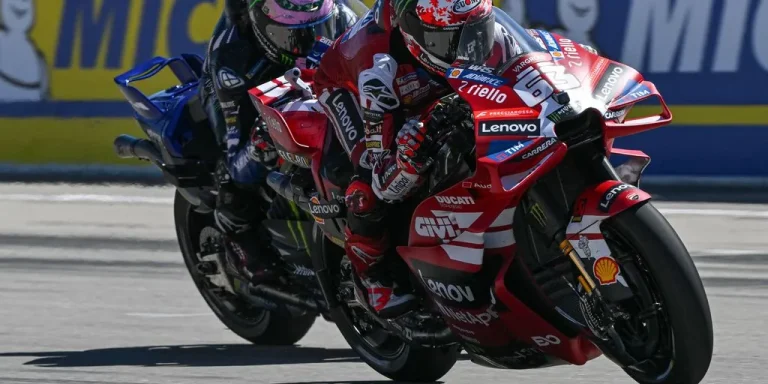
To handle tracks where corner layouts place uneven demands on machinery, Michelin produces tyres with asymmetric compound designs. Circuits with a dominant corner direction generate higher lateral loads and elevated temperatures on one shoulder of the tyre. By applying a harder compound to the heavily stressed shoulder and a softer compound to the opposite side, engineers balance grip, durability, and pressure tolerance across the entire race distance.
Traceability Through Embedded RFID Chips
Every Michelin MotoGP tyre incorporates a tiny embedded Radio Frequency Identification (RFID) chip. This electronic tag stores comprehensive production data, including the compound specification, carcass specification, manufacturing date, and batch. Michelin uses this technology to maintain complete traceability, enabling engineers to track the exact history of every tyre utilized on a premier-class machine.
Precision Layering and Vulcanisation
The design process begins with extensive computer simulations that model tyre behaviour under load before physical prototypes are constructed. Once specifications are set, physical tyre manufacturing commences on a spinning, heated steel mould. Robotic arms apply component layers in sequence: the base sealing rubber first, then the carcass cord layers, the steel belt package, and finally the working rubber compound.
Next, the assembled tyre goes into a press where it undergoes vulcanisation under high heat and high pressure. This vulcanisation process chemically bonds all the layers together and permanently sets the tyre's definitive shape and structural characteristics. The specific temperature and pressure conditions during vulcanisation directly determine the tyre's final operating properties.
Circuit-Specific Variables and Sprint Demands
Michelin brings customized tyre specifications to each Grand Prix rather than a universal allocation. Engineers evaluate multiple circuit-specific variables, including track surface abrasiveness, circuit geometry, dominant turn directions, and ambient and surface temperatures. Rougher tracks increase heat generation and compound wear, while fast, flowing corners produce distinct lateral stresses compared to tight braking sections.
Tyre requirements expanded further following the 2023 introduction of Saturday Sprint races. Riders now require tyres capable of delivering peak performance over shorter distances alongside the traditional full-length Grand Prix, introducing a distinct operational demand on the tyre range.
Testing Protocols and New Circuit Simulation
New compound and construction variants undergo laboratory testing to measure stiffness, hardness, heat generation, and durability before track validation with MotoGP riders during official test sessions. Track testing opportunities remain limited across participating manufacturers—Aprilia, Ducati, Honda, KTM, and Yamaha. Michelin has refined its compound portfolio down to several dozen specifications, selecting two suitable variations for most race weekends based on circuit characteristics and previous data.
When visiting unfamiliar venues without prior testing, such as the Autódromo Internacional de Goiânia – Ayrton Senna for the 2026 Brazilian Grand Prix, Michelin relied on computer simulations. Because the circuit layout places higher loads on the right side, engineers supplied asymmetric front and rear tyres with a more resistant compound on the right shoulder, alongside two rear carcass options to manage tyre temperature across the race distance.
Rider Allocations for Grand Prix Weekends
Under the 2026 regulations, each MotoGP rider is allocated 22 slick tyres per Grand Prix weekend—10 front tyres and 12 rear tyres. Michelin supplies two front specifications and two rear specifications at most rounds, though a third front specification is offered at tracks with high weather variability. For wet or mixed track conditions, riders receive 13 rain tyres, consisting of six front and seven rear tyres.
Michelin Era and the Upcoming 2027 Transition
The 2026 season marks the conclusion of Michelin's 11-year tenure as sole tyre supplier to the premier class, having served since 2016. During this period, Michelin reduced the number of tyre specifications provided per event while improving safety, consistency, and setting numerous circuit lap records. From 2027 onward, Pirelli becomes the official sole tyre supplier across MotoGP, Moto2, and Moto3, introducing new compound formulations and construction philosophies alongside revised technical regulations.
Michelin will simultaneously transition to become the sole tyre supplier for the World Superbike Championship (WorldSBK).
Sources: How Are MotoGP™ Tyres Designed? Inside MotoGP's Race Rubber.