In this article
Principles of MotoGP Downforce Generation
MotoGP winglets function on the inverted aerodynamic principle of an aircraft wing. Forward motion directs incoming airflow across the contoured profile of the winglet. This creates a pressure differential between surfaces, producing higher pressure on top and lower pressure underneath to generate downforce that pushes the front wheel toward the asphalt.
Romano Albesiano, former Aprilia Racing Technical Director who subsequently moved to Honda, described the concept as an inverted aeroplane wing where lower surface pressure pushes the motorcycle downward. At track speeds reaching 350 to 360 km/h, modern prototype winglets can produce an estimated 35 to 50 kilograms of downforce, providing additional tyre grip against the track surface.
Comparing Motorcycle Downforce with Formula 1 Aerodynamics
Motorcycle aerodynamic appendages operate under completely different dynamic conditions than open-wheel racing cars. In four-wheel circuit racing, as explored in our guide to F1 wing downforce and drag trade-offs, front wings generate downforce to increase cornering grip for a car that remains relatively upright without leaning into bends.
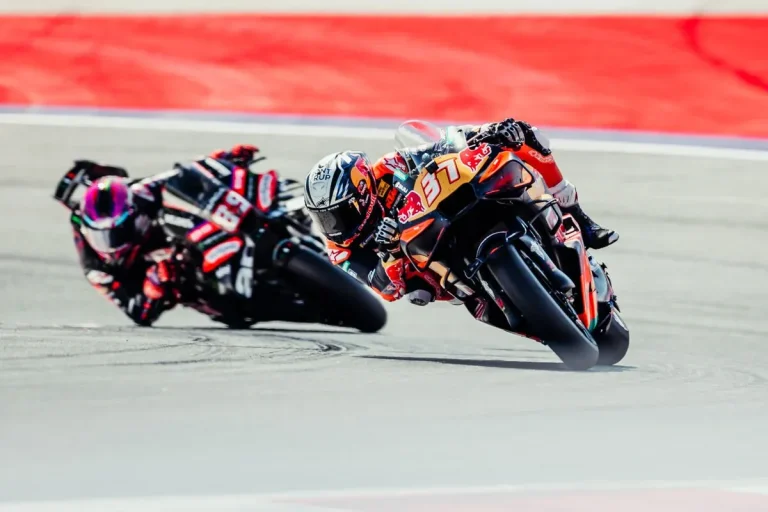
By contrast, Grand Prix motorcycle riders lean into turns at extreme lean angles approaching 65 degrees. When a motorcycle rolls over, the winglets and aerodynamic fairing inlets change their orientation relative to the oncoming airflow. This orientation generates lateral downforce that helps keep the front tyre planted during fast cornering sequences.
Anti-Wheelie, Braking Stability and Aerodynamic Drag
Along straights, the primary task of front winglets is mitigating wheelies during severe acceleration. Modern prototype motorcycles possess high power-to-weight ratios and high centres of gravity that naturally pivot the front wheel upward under hard acceleration. Winglet downforce holds the front tyre against the ground, allowing riders to apply throttle without electronics intervening to suppress lift.
Downforce also stabilises the front chassis at speeds exceeding 360 km/h, damping unsettling movements where the front end could otherwise become light. Under braking at straight ends, peak downforce increases load on the front tyre. However, these appendages also create aerodynamic drag that penalises top speed, requiring engineers to balance downforce gains against straight-line resistance.
Related posts
Early Experiments and the 2015 Aerodynamic Revolution
Aerodynamic wings appeared intermittently in Grand Prix motorcycle racing decades before their widespread modern adoption. MV Agusta tested small front wings on Phil Read's 500cc Grand Prix bike at the 1972 Dutch TT. In 1978, Mike Hailwood rode a Suzuki RG500 fitted with front wings. These rudimentary experiments did not trigger lasting adoption.
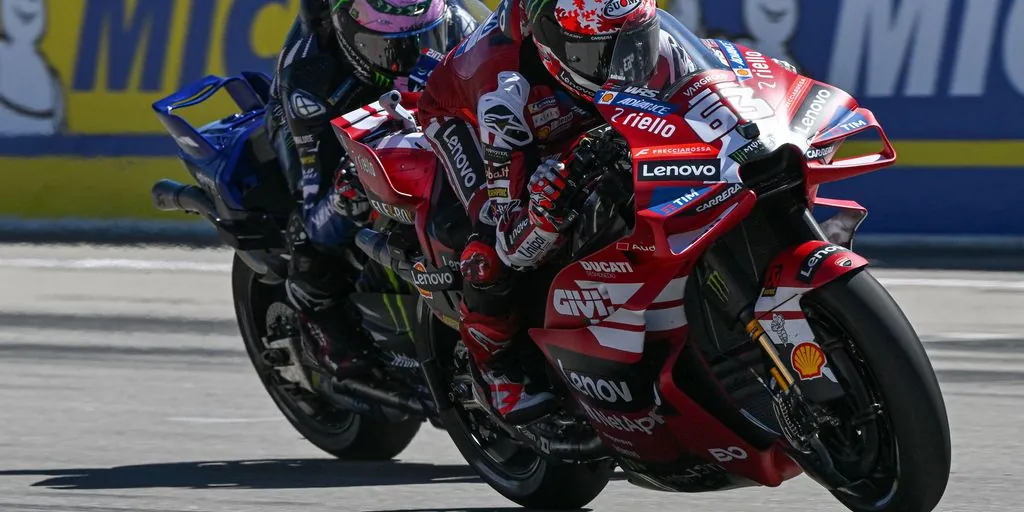
The modern aerodynamic era began in 2015 when Ducati fitted external winglets to its Desmosedici GP15 machine. Ahead of the mandatory 2016 unified Dorna electronic control unit, which featured less sophisticated anti-wheelie software than factory bespoke packages, winglets supplied an effective mechanical remedy. Seeing Ducati's competitive advantage on acceleration, rival factory teams developed their own wings within a single season.
Safety Controversies and the Shift to Integrated Fairings
By 2016, winglets had grown into sharp, multi-element carbon-fibre structures protruding from front fairings. Competitors and officials raised safety concerns regarding close-contact racing, fearing protruding edges could snag opponent machines or cause injuries during crashes. Consequently, the Fédération Internationale de Motocyclisme intervened in 2016, prohibiting detached, protruding winglets from the 2017 season onward.
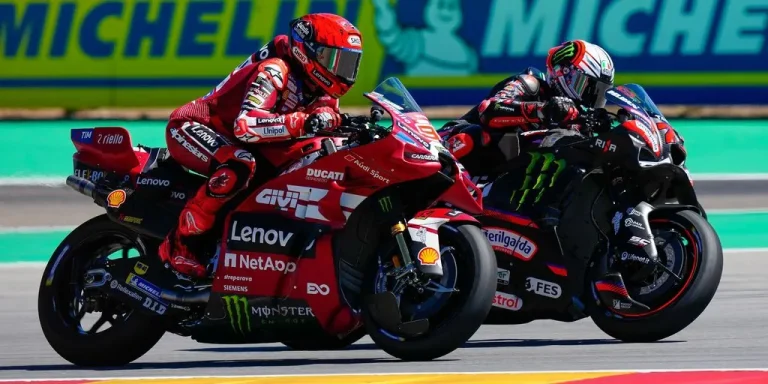
Manufacturers responded by creating integrated fairing solutions where aerodynamic shapes were incorporated directly into the bodywork streamlining. Technical expansion continued in 2019 when Ducati introduced a swingarm-mounted lower aerodynamic scoop, which the MotoGP Court of Appeal validated after formal protest. Following this ruling, the FIM mandated that all aerodynamic surfaces undergo homologation under the formal Aero Body regulations.
Development Expansion and Seat Winglet Debates
From 2022 onward, aerodynamic competition intensified across all five premier class manufacturers: Aprilia, Ducati, Honda, KTM and Yamaha. With engine and technical dimensions tightly restricted to contain expenses and maintain parity, aerodynamic development became one of the primary avenues for performance gains, producing multi-element fairings and specialized airflow channels across the grid.
Late in 2025, Aprilia unveiled rear appendages mounted below the seat behind the rider's legs, a concept Honda soon mirrored. Critics questioned whether seat wings risked trapping or injuring riders during falls. While the FIM evaluated an immediate ban, the federation opted in December 2025 to permit them throughout 2026 before phasing them out for 2027.
FIM Technical Regulations and Homologation Limits for 2026
In 2026, FIM regulations restrict maximum motorcycle bodywork width to 600 millimetres. The rulebook defines the Aero Body as bodywork sections directly impacted by frontal airflow that are not shielded by the rider or other components. Non-integrated devices or shapes protruding from the fairing or bodywork that provide an aerodynamic effect, such as generating downforce or disrupting aerodynamic wake, are prohibited.
All aerodynamic components require approval and homologation from the Championship Technical Director before the season starts. In-season aerodynamic updates are controlled via concession ranks: manufacturers in classes A, B and C receive one update per rider, while class D manufacturers receive two. Structurally, winglets must record a maximum deflection of 10 millimetres under a 50-newton load test.
The 2027 Regulatory Reset and Future Outlook
The 2027 championship technical regulations introduce substantial restrictions to scale back downforce and emphasize rider control. Forward fairing profiles must shift rearward and maximum allowable widths will decrease, reducing winglet dimensions. Officials implemented these revisions partly to lessen turbulent air wake, which trailing riders reported created front tyre instability when preparing an overtaking maneuver.
Furthermore, regulators confirmed complete bans on ride-height devices and holeshot systems for 2027 to address cost and safety considerations. Seat winglets are also expected to disappear under the revised rulebook. This structural reset marks the most extensive regulatory reduction in prototype motorcycle aerodynamics since winglets entered the series in 2015.
Sources: What Are MotoGP™ Winglets? How They Work, Their History and the Rules Explained.