At a glance
- The FIA officially opened its new Biggin Hill Remote Operations Centre on 20 October, expanding remote support for F1, F2 and F3 officials.
- The facility was already fully operational from the 2026 Dutch Grand Prix, with up to 16 staff working during race weekends.
- Analysts and AI-assisted tools help identify potential infringements; sporting decisions remain with officials.
The FIA has officially opened a new Remote Operations Centre at Formula 1’s Biggin Hill campus, investing in the staff and technology that help trackside officials examine incidents. The governing body says the move brings better circuit connectivity and greater operational capability, with faster, more accurate and more consistent support its stated objective.
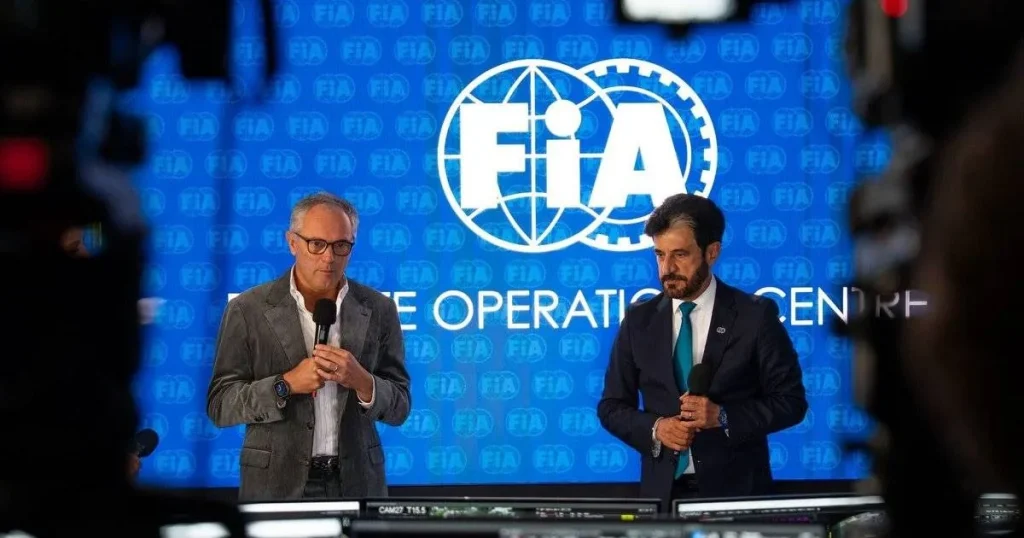
FIA president Mohammed Ben Sulayem and Formula 1 president and CEO Stefano Domenicali opened the facility on 20 October. The ceremony followed its entry into full operation at the 2026 Dutch Grand Prix, according to the FIA’s announcement.
More capacity to examine race incidents
Developed with Formula 1, the centre represents a multi-million-pound FIA investment. It provides support to Race Control and stewards across F1, F2 and F3 during Grand Prix weekends, with capacity for up to 16 staff working remotely. The FIA describes the weekend service as around the clock.
The analysts’ workload extends across several familiar sources of sporting investigations: suspected jump starts, incorrect grid positioning, track limits violations, pit lane offences and compliance with stop-and-go penalties. Their role is to identify and assess potential infringements, supplying information that informs officials’ decisions.
To do that, analysts process more than 140 live audio and video feeds, alongside car-positioning telemetry and team radio communications. That combination gives the remote team several types of evidence to examine during a race weekend, rather than relying on a single view of an incident.
Related posts


AI flags incidents for officials to assess
AI-assisted shape recognition, computer vision and automated radio-message tagging help flag matters for examination. According to GrandPrix247’s report, the FIA says sporting decisions remain the responsibility of officials.
The ROC, Race Control, Systems Operations and the stewards form the four pillars of FIA Race Operations.
The opening announcement sets out the intended benefits of that arrangement, but supplies no quantified comparison of decision times or officiating accuracy before and after the relocation. Improved consistency is therefore an objective of the investment, rather than a demonstrated result established by the announcement.
A role beyond live race weekends
The centre’s work also extends to post-event reviews, which the FIA says will inform future rules and help train Race Control operators. That gives the facility a development role beyond the immediate task of examining potential infringements during competition.
It also supports the FIA’s High Performance Programme for Officials. Running since 2023, the programme offers stewards and race directors from around the world personalised training and a pathway to FIA World Championship-level roles. The governing body presents the new centre and that existing programme as complementary investments in the people responsible for future race management.
Image credit: Representative image. · Source: grandprix247.com · Modifications: Optimized to WebP; earlier source editing history is unverified · Image source