
In this article
Championship Context and Title Defences
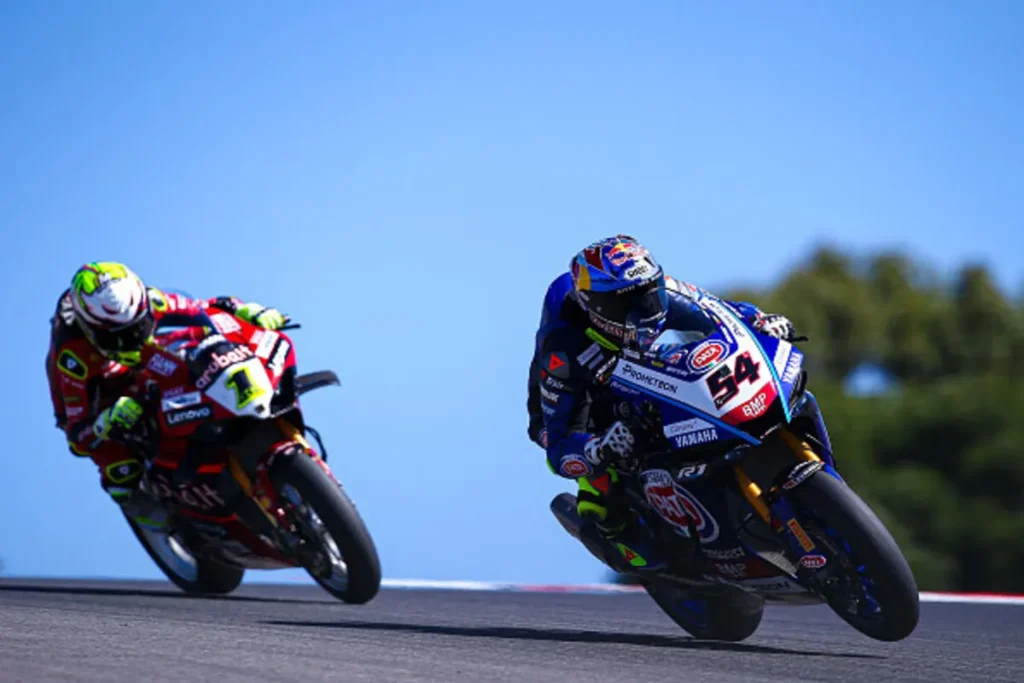
The 36th edition of the Superbike World Championship opens on 23 February with free practice sessions at Phillip Island in Australia. Alvaro Bautista and Ducati enter the campaign defending both the riders' and manufacturers' crowns secured in 2023. Riding the Panigale V4R, the Spanish rider arrived as the competitor to beat after appearing continuously on the roll of honour since 2022, when Ducati halted Kawasaki's dominant championship era.
Ducati also confirmed its competitive strength in 2023 by taking the Independent Trophy through Axel Bassani. Heading into the new season, the paddock faces substantial updates across the technical rulebook, sporting regulations, and rider contracts, setting up fresh rivalries across the twelve-round calendar for both factory and independent squads.
Minimum Weight and Engine Technical Revisions
A major technical change for 2024 establishes an 80-kilogram combined reference threshold for motorcycle and rider. Competitors below this benchmark must carry 0.5 kilograms of ballast for every single kilogram they fall short. This provision required Alvaro Bautista to add seven kilograms of ballast to his setup, drawing strong criticism from Ducati and the Borgo Panigale factory team.
Technical adjustments also restrict fuel tank capacity to 21 litres, with regulations mandating that 40 percent of the fuel derive from non-fossil sources. Furthermore, series organisers eliminated in-season alterations to engine revolution limits. Maximum engine speeds will now remain unchanged throughout the year rather than fluctuating during the championship.
Concession Framework and Engine Component Tolerances
A revised concession framework balances manufacturer performance across the season. Concession points are now calculated after every two rounds rather than every three, and the sprint Superpole Race is incorporated into the scoring assessment. If a performance deficit of at least 33 points opens between manufacturers, the trailing brand receives access to technical concessions.
Under the technical regulations, manufacturers can alter key internal components to adjust engine characteristics. Specifically, the crankshaft and the balance shaft may both be modified by plus or minus 20 percent relative to the homologated weight recorded during the FIM inspection.
Related posts
Sporting Regulations and Weekend Timetable Adjustments
The sporting regulations introduce a dedicated world team championship classification, supplementing the existing standings for riders, manufacturers, and independent competitors. Participation in this team table is optional and restricted to squads applying for a dedicated licence. Alongside this ranking, penalties for breaching engine allocation quotas now mandate a start from the back of the grid combined with two Long Lap Penalties.
Track schedules feature altered durations across two weekend track sessions. Free Practice 3 drops from 30 minutes down to 20 minutes, while Sunday morning warm-up running is reduced from 15 minutes to 10 minutes, tightening track preparation time for race crews before competitive action.
Calendar Venues and New Additions
The 2024 WorldSBK calendar comprises twelve rounds, maintaining the previous season's total volume. Italy hosts two separate events, keeping Misano Adriatico for the Emilia-Romagna round while removing Imola from the schedule. In Imola's place, the Cremona circuit makes its championship debut as host venue for the Italian round.
The schedule introduces Hungary's Balaton circuit as another new venue, while the Indonesian round at Mandalika departs from the tour. The championship concludes during the second half of October at Jerez de la Frontera in Spain, which represents the only nation hosting three rounds during the campaign.
Key Rider Transfers and Manufacturer Changes
The 2024 rider market features major moves among established frontrunners. Jonathan Rea concluded nine seasons and six consecutive titles with Kawasaki to join Yamaha. Rea fills the seat vacated by 2021 champion Toprak Razgatlioglu, who opened a new chapter with BMW. Razgatlioglu takes over from Scott Redding, who moves to BMW's satellite team alongside Garrett Gerloff, leaving Loris Baz off the grid.
Without Rea, Kawasaki turns to Axel Bassani. At Ducati, reigning Supersport champion Nicolò Bulega steps up for his category debut, replacing Michael Rinaldi, who moves to Motocorsa Racing. Andrea Iannone returns to racing after a four-year suspension to contest his first Superbike campaign with Team GoEleven.
Satellite Squad Entries and Grid Departures
Further rider adjustments altered independent garage lineups across the paddock. Philipp Öttl transferred to GMT94 Yamaha, replacing Lorenzo Baldassarri. The Petronas MIE squad replaced Hafizh Syahrin and Eric Granado by promoting Adam Norridin and Tarran MacKenzie into its race seats for the championship campaign.
Team entries also shifted, as Orelac Racing departed the series, while TPR Pedercini scheduled its Kawasaki entry to begin from round two with Isaac Viñales. In addition, the Elf Marc VDS racing team makes its Superbike championship debut fielding Sam Lowes on a Ducati machine.
Television Broadcasting and Streaming Distribution
Television broadcasting and digital streaming channels provide live coverage across race weekends. Live session broadcasts are carried on Sky Sport, accompanied by online streaming access via NOW Tv and Sky Go platforms. In addition, television viewers can follow selected race events on free-to-air television through TV8.