In this article
Abrasion Resistance and Leather Construction
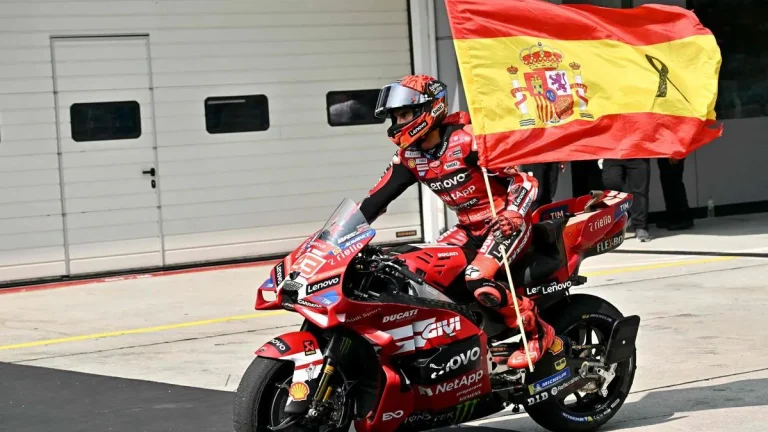
MotoGP competitors operate at speeds exceeding 350 km/h, where crashes regularly send riders sliding over track surfaces. The primary outer layer of modern racing suits is typically kangaroo or premium cowhide leather. Suit manufacturers regard natural leather as superior to synthetic or textile alternatives because of its remarkable natural durability, breathability, and resistance to abrasion.
When crashes occur, riders typically land on the asphalt and slide across the surface into run-off gravel, generating intense friction. Natural leather creates a resilient barrier that helps protect the skin from severe road rash. Unlike synthetic textiles, leather can endure severe frictional abrasion without easily tearing open, maintaining a secure, flexible, and comfortable protective envelope around the racer.
Impact Armor and Structural Reinforcements
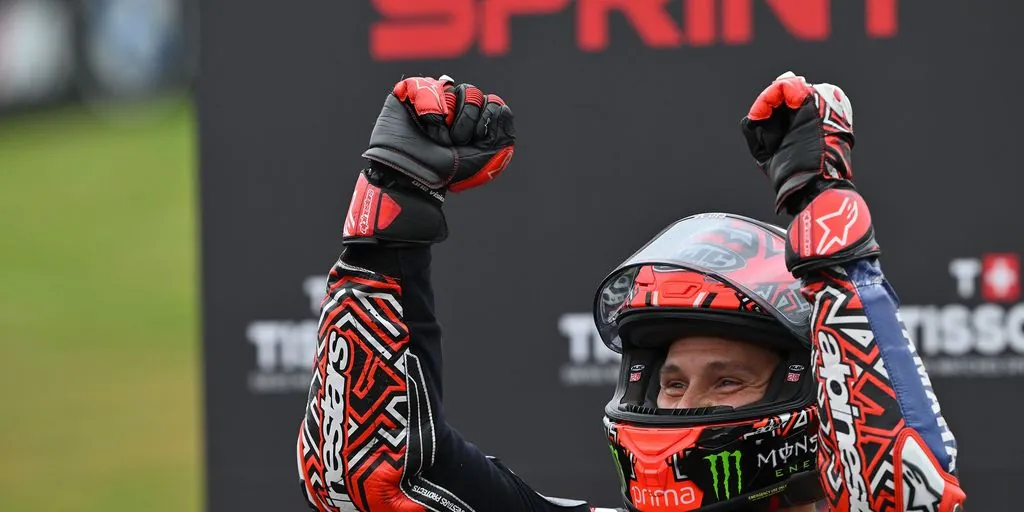
Beyond outer hide, modern racing suits rely on integrated armor positioned at vulnerable contact areas. Manufacturers such as Alpinestars and Dainese insert rigid protectors across the chest, shoulders, back, elbows, forearms, knees, shins, and coccyx. These shields use composite materials, including thermoplastic polyurethane and carbon fiber, engineered to absorb blunt energy if a competitor strikes the asphalt, another motorcycle, or trackside barriers.
To balance protective stiffness with physical mobility, builders incorporate flexible stretch zones into the suit chassis. Reinforcement patches and accordion panels integrate durable Kevlar and Aramid fibres, providing extra tear strength without restricting the racer. Every suit is tailored to fit the athlete closely, keeping each protective element aligned during an impact.
Track Feedback and Replaceable Cornering Sliders
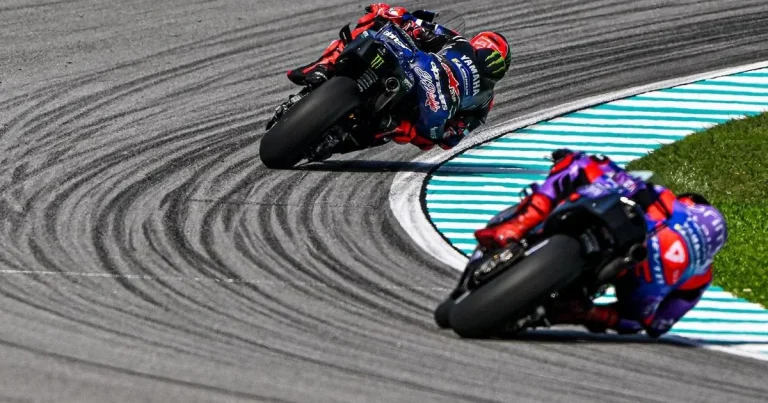
Grand Prix competition demands extreme vehicle dynamics, with motorcycles cornering at lean angles reaching 65 degrees from vertical. While pushing these limits, riders use replaceable sliders mounted on the exterior of the knees, elbows, and shoulders. These hard sliders touch the track surface directly, serving as tactile reference points that assist competitors in balancing the bike and judging lean angles. For more on high lean angles, see leaning mechanics and knee dragging.
Severe track contact remains an ordinary hazard of pushing boundaries. The 2024 Grand Prix calendar recorded 335 total crashes across 20 race weekends, averaging 16.8 falls per event. This represented a slight reduction from 358 crashes counted across the 20 events held in 2023. Whenever a slide occurs, the exterior leather and sliders absorb extreme frictional heat.
Related posts
Aerodynamic Speed Humps and Technical Compartments
Elite motorcycle road racing introduced the prominent speed hump behind the rider's neck during the late 1980s and early 1990s. Its initial purpose was aerodynamic smoothing. As riders tuck forward over handlebars during high acceleration along straights, the hump bridges the turbulent wake between helmet and back, reducing aerodynamic drag. High straight-line velocity is explored further in MotoGP top speed analysis.
Modern equipment manufacturers—including Alpinestars, Dainese, and Spidi—have transformed the aerodynamic hump into an equipment bay. The compartment now houses telemetry devices, processing electronics for active airbag systems, and drinking bladders. These hydration reservoirs feed fluid directly to the rider through an internal hose routed into the helmet, sustaining physical hydration during demanding thermal sessions.
Autonomous Airbag Systems and Deployment Speed
Integrated airbag vests now provide autonomous torso protection across Grand Prix grids. The internal electronic package tracks rider movement through onboard accelerometers, gyroscopic sensors, and GPS data streams. When these instruments recognize crash telemetry, an internal firing mechanism releases a pin to puncture the cap of a compressed carbon dioxide cylinder, rapidly inflating the vest within roughly 0.045 seconds of crash initiation.
The expanding airbag structure disperses collision shock away from vital anatomy, including the ribcage, chest, shoulders, neck, and upper spine. The severity of impacts was highlighted during the 2025 Qatar Grand Prix, where 2024 World Champion Jorge Martin crashed heavily while already recovering from earlier pre-season injuries.
Martin sustained posterior rib fractures, chest trauma, and a right thorax contusion with pneumothorax, sidelining his title defence through the early season. After the accident, Martin noted on social media that the consequences could have been far worse without his advanced protective gear.
Riding Ergonomics and Track-Specific Tailoring
A competitive suit functions as specialized performance apparel alongside boots, gloves, helmets, and acoustic equipment such as rider earplugs. Race suits incorporate airflow channels, perforation zones, and flexible accordion panels. These features deliver far greater physical mobility and cooling ventilation than consumer road-riding leathers, allowing athletes to maneuver quickly without compromising their safety barriers.
Former Grand Prix competitor Simon Crafar, winner of the 1998 British Grand Prix, explained how MotoGP suits are specially designed for competition. Crafar stated that conventional road suits bunch loosely across the chest in a compact racing crouch while tugging uncomfortably across the back, unnecessarily sapping muscular stamina over distance.
According to Crafar, dedicated racing suits are tailored with pre-curved sleeves and shorter frontal cuts suited purely to a crouched posture. While awkward for walking around pit garages, this geometry fits seamlessly aboard the bike. Flexible accordion paneling stretches with movement, ensuring internal protective armor cannot shift during a sudden tumble.