In this article
Abrasion Resistance and Impact Defence at High Speed
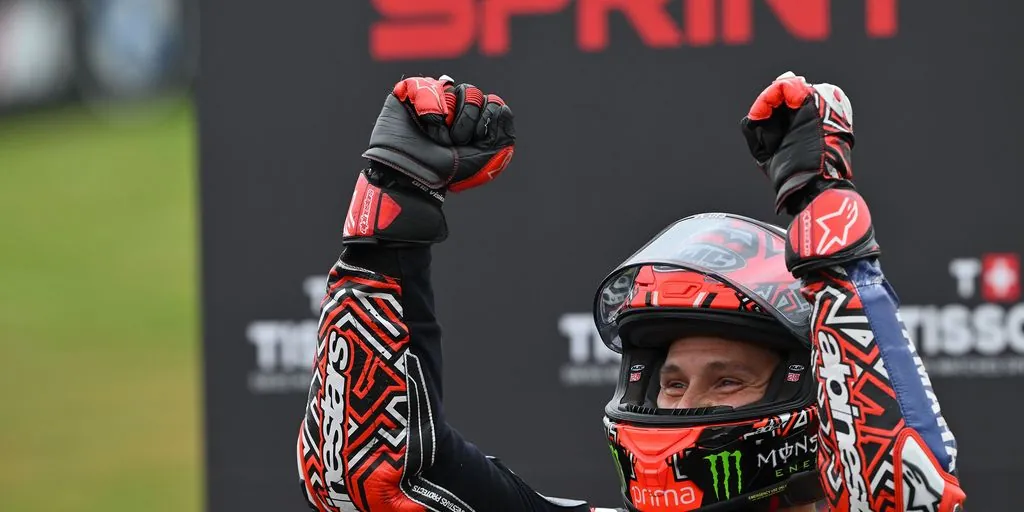
MotoGP competitors race at speeds exceeding 350 km/h, making specialised protective gear indispensable whenever incidents occur. A rider's customised leather suit functions alongside the helmet, gloves, and boots as vital safety equipment. When an accident happens, the suit provides critical abrasion resistance as the rider slides across circuit asphalt or through gravel run-off areas. Internal protective pads, external sliders, and integrated airbag systems work together throughout the construction to help reduce impact injuries.
Why Natural Leather Remains the Primary Outer Layer
Suit manufacturers typically construct the primary outer layer from kangaroo or premium cowhide leather. Suppliers deem natural hide superior to textile or synthetic substitutes because of its breathability, durability, and unmatched resistance to abrasion. Unlike synthetic fabrics, leather can withstand high abrasion levels without tearing easily during a severe fall. This tough barrier wraps securely around the competitor's body, helping protect skin from debilitating road rash while maintaining a comfortable, flexible fit.
Friction, Heat and Crash Frequency on Track
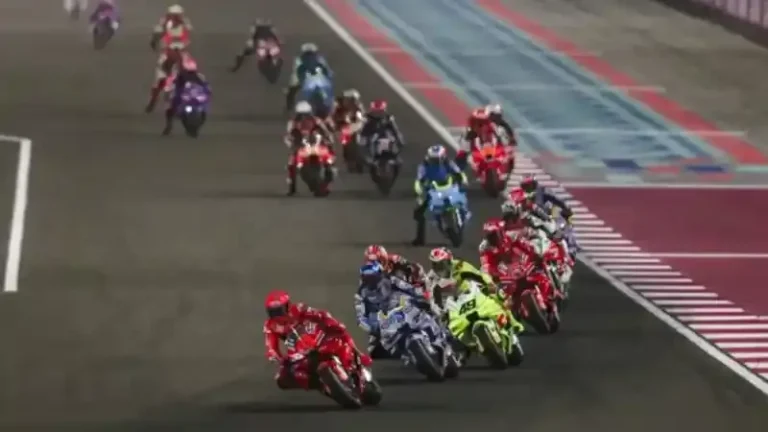
Grand Prix riders push machines to the limit, braking at the last millisecond and cornering at lean angles reaching 65° from vertical. Crashes remain frequent under these intense conditions. In 2024, the championship recorded 335 falls across 20 Grand Prix weekends, averaging 16.8 crashes per event, down from 358 across 20 events in 2023. Skidding over asphalt into gravel traps generates immense friction and heat, which purpose-built racing leathers are specifically engineered to endure.
Internal Composite Armour and TPU Protectors
Manufacturers such as Alpinestars and Dainese incorporate rigid composite armor beneath the outer hide to absorb impact energy. Engineers place protective inserts crafted from carbon fiber and thermoplastic polyurethane, known as TPU, at critical zones. These components shield the chest, shoulders, elbows, back, knees, and shins. Each suit is tailored to keep these protective elements firmly positioned over vulnerable joints during an accident while still allowing the competitor to move freely.
Accordion Stretch Panels and Flexible Reinforcements
To combine flexibility with structural strength, racing suits utilise accordion stretch panels reinforced with Kevlar and Aramid fibres. These flexible sections allow the suit to fit snugly against the body while delivering extra tear resistance. As former racer Simon Crafar noted, maintaining this close, snug fit ensures that internal impact protectors cannot shift out of alignment during a fall, preserving their coverage when the competitor contacts the ground.
Related posts

Ergonomic Demands of the Racing Tuck
MotoGP race suits differ markedly from standard road apparel by incorporating perforation zones, dedicated airflow channels, and competition-focused tailoring. Tailoring keeps joint protectors for the knees, coccyx, shoulders, back, elbows, and forearms accurately situated. Former racer and 1998 British Grand Prix winner Simon Crafar pointed out that everyday road leathers fail on track because they bunch up loosely in front and restrict arm reach when adopting an aggressive crouch over the handlebars.
Crafar explained that road apparel pulls tight across the back, preventing riders from stretching their arms forward toward the controls. Fighting the suit's stiffness drains physical energy and causes fatigue over race distances. In contrast, purpose-built racing leathers feature pre-curved sleeves and are much shorter in the front. While uncomfortable when standing or walking upright, this specialized cut provides fantastic comfort and mobility once the rider is tucked into position aboard the motorcycle.
External Sliders for Balance and Cornering Clearance
Beyond internal pads, racing suits mount replaceable external sliders on the knees, elbows, and shoulders. Positioned on the exterior leather, these pucks permit competitors to brush the asphalt surface safely through turns. Skimming the ground provides tactile sensory cues to judge lean angle and maintain chassis balance, a technique detailed in guides covering knee dragging and leaning mechanics. These external sliders provide vital additional protection during extreme cornering.
Evolution and Technology of the Speed Hump
The prominent speed hump on the rider's upper back originated in elite motorcycle competition during the late 1980s and early 1990s. Originally invented to reduce aerodynamic drag created when riders tuck down over the handlebars on straights, the hump now also acts as a compartment where components are carried. Suppliers such as Alpinestars, Dainese, and Spidi now house data loggers, electronic airbag controllers, and hydration bladders equipped with drinking tubes leading into the helmet.
Autonomous Electronic Airbag Deployment
Autonomous airbag vests are now standard safety features integrated directly into every premier-class leather suit. Monitoring dynamics through gyroscopes, accelerometers, and GPS sensors, the system identifies when a crash begins. A release mechanism triggers a pin that punctures the metal cap of an internal CO2 cylinder, inflating protective chambers within approximately 0.045 seconds. The deployed airbag shields the ribcage, chest, shoulders, neck, and upper back, dispersing heavy impact loads across a wider area.
Multi-Rider Collisions and Impact Mitigation
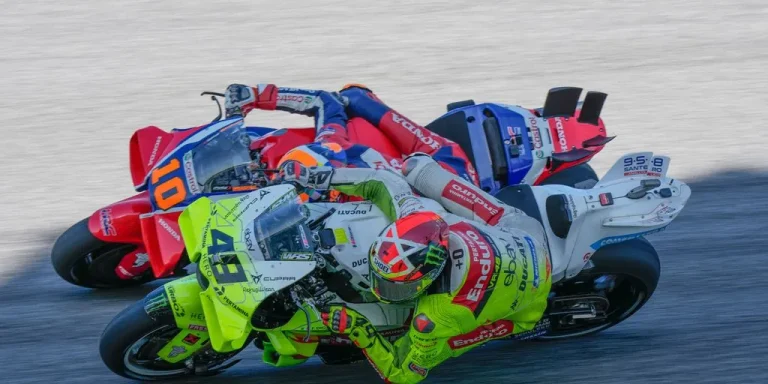
The combination of resilient leather, synthetic Aramid fibres, and internal armour significantly lowers injury risks during complex racing incidents. If a rider collides with a competitor or impacts trackside crash barriers, strategically distributed protectors absorb blunt force across vulnerable body structures. Continuous development in materials and ergonomic design ensures that modern suits assist riders with both active performance and passive crash mitigation, shielding them against abrasive track surfaces and trackside obstacles.
Championship Crash Evidence: Jorge Martin at Qatar
The protective capability of modern leathers was demonstrated during a severe incident at the 2025 Qatar Grand Prix involving 2024 World Champion Jorge Martin. While still recovering from earlier pre-season injuries, Martin suffered a high-profile crash resulting in fractured right posterior ribs and chest trauma with right thorax contusion and pneumothorax.
The crash sidelined Martin for a significant period of his title defence, but he noted on Instagram that without his suit, it could have been much worse.
Related reading: Why MotoGP Riders Wear Leather Suits: Protection, Airbags and Ergonomics.