In this article
Thursday Press Conference Rescheduled to 20:00
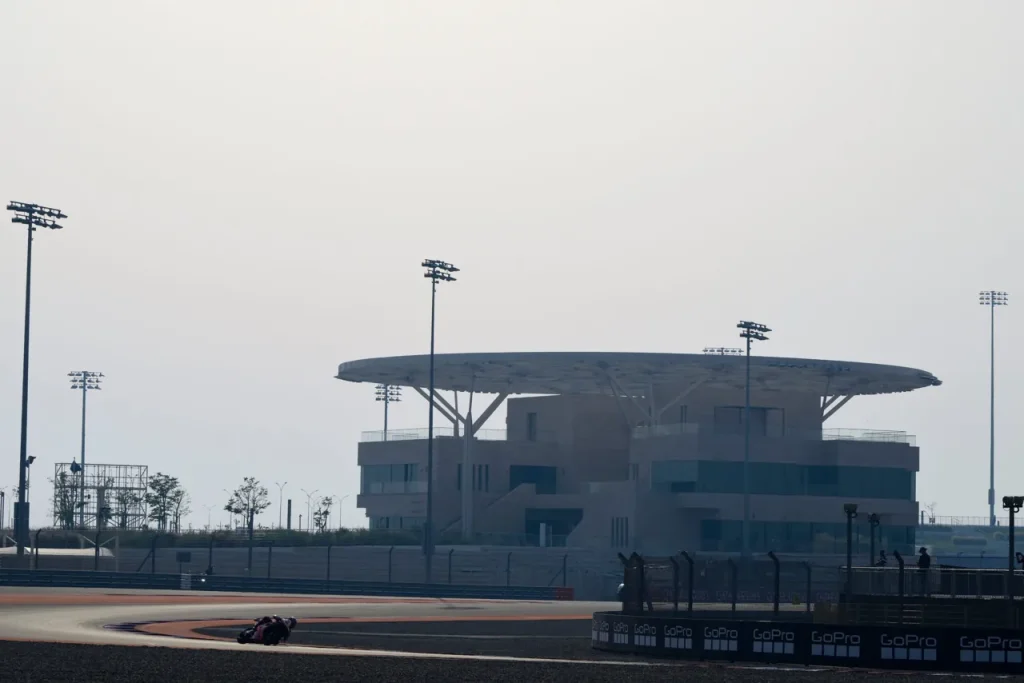
Organizers of the Qatar Grand Prix have delayed the opening Thursday press conference at the Losail circuit to 20:00 local time, adjusting the promotional schedule to accommodate late-arriving competitors while signaling that paddock presence will be necessary. The initial media session is customarily held four hours earlier at 16:00 local time. However, organizers postponed the gathering into the evening to account for participants landing in Doha later than usual following the preceding round at Sepang. While the timetable has been modified to manage arrival logistics, the Grand Prix itself remains scheduled on the championship calendar, sending a clear message across the paddock that it will be necessary to be present.
Reported Paddock Unease and Unconfirmed Rider Letter
The revised travel patterns and subsequent schedule delay unfold against a backdrop of heightened regional security concerns. Paddock information indicates that 19 of the 22 premier-class riders reportedly sent a letter to MotoGP Group voicing opposition to traveling to Qatar for the event. Nevertheless, neither this number nor the exact text and contents of the reported letter have been independently verified. Furthermore, the complete individual motivations behind each competitor's delayed journey to Doha have not all been clarified.
Related posts

Staggered Arrivals from Malaysia, Spain and Italy
Competitors adopted diverging travel arrangements following the Malaysian Grand Prix, with multiple riders not expected to reach Doha until Thursday. Some racers chose to prolong their post-race stay in Malaysia following the Sepang weekend, whereas other riders returned home to Spain or Italy before embarking on their journey to the Middle East. By shifting the press conference four hours later, organizers can absorb these last-minute arrivals amid wider schedule uncertainty ahead of the Losail event without having to cancel media engagements altogether. For now, the list of summoned riders has not yet been released.
Schedule Adaptation Without Promotional Exemptions
Despite these reservations, event organizers have kept the Grand Prix on the calendar rather than eliminating the scheduled media day or announcing a general waiver from promotional duties. The decision to alter the schedule reflects an important distinction: officials are acknowledging the logistical difficulties created by a paddock whose members are arriving in stages, but without yielding on the principle of presence in Qatar. Organizers have opted to adjust the timetable rather than scale back the event.
Commercial Significance of Thursday Commitments
Thursday at a Grand Prix represents far more than a simple formality. Press conferences, interviews, promotional sessions, and partner engagements form part of the championship's economic dynamic, involving teams, television broadcasters, sponsors, and media outlets. Consequently, postponing a press conference by four hours functions as a logistical adaptation rather than a profound alteration of standard routines.
Contrasting Priorities Between Riders and Organizers
This scheduling adjustment does not mean every racer must personally participate in all initially scheduled activities, as individual summonses still need to be clarified. However, the general intention appears evident: the organization aims to preserve the operation of the weekend rather than significantly reduce planned obligations. The situation presents two opposing strategies, with riders seeking to limit their time in Qatar while organizers intend to maintain the Grand Prix and its associated duties by adjusting specific session times.
Thursday Evening as Initial Gauge of Paddock Presence
Thursday evening will provide an initial test of how these competing stances unfold before journalists. The rescheduled media session will show which competitors ultimately appear, how they explain their late arrivals, and whether they can voice their concerns while participating in promotion for an event whose staging is contested by some within the paddock. Behind the four-hour schedule change lies a broader question regarding how far ordinary Grand Prix routines can be demanded when key participants challenge the conditions under which the round is held.