In this article
Enzo Ferrari and the Birth of Scuderia Ferrari
Enzo Ferrari grew up watching mechanics repair engines inside his father's workshop, which fabricated railway axles and metal parts. After witnessing Felice Nazzaro win at the Circuito di Bologna car race at age ten, he resolved to become a racing driver. Following family deaths during World War I and an employment rejection from Fiat, Enzo secured work testing converted trucks at CMN before making his competitive driving debut on October 5, 1919.
Joining Alfa Romeo in 1920, Enzo scored eleven race victories, including his first Grand Prix triumph at Ravenna in 1923. He founded Scuderia Ferrari in 1929 as a racing team for Alfa Romeo to fund his motor racing passion. Backed by Alfa Romeo, the squad took victory at the 1935 German Grand Prix. Enzo left Alfa Romeo in 1939, moving operations to Maranello during World War II and building the Ferrari 125 S in 1947.
Ferrari won the 24 Hours of Le Mans in 1949, cementing their racing expertise before Formula 1 began in 1950. Enzo managed personnel aggressively as an agitator of men, often hiring more drivers than available seats to spur internal rivalry. The squad adopted the Prancing Horse emblem after the parents of Italian fighter pilot Francesco Baracca suggested the symbol would bring good luck, combining the airplane emblem with the vibrant yellow of Modena.
The Inaugural Decade and Ascari's Dominance
Formula 1 launched its World Championship in 1950. Ferrari missed the inaugural race at Silverstone before making its championship debut at the Monaco Grand Prix. Competing against Alfa Romeo, Maserati, and Mercedes-Benz, Alberto Ascari emerged as Ferrari's first superstar. Ascari delivered Ferrari's first Drivers' World Championships in 1952 and 1953, spearheading a dominant sequence where the Italian constructor and driver combination won six consecutive championship Grand Prix races.
Grand Prix racing during the 1950s exposed drivers to extreme danger, featuring tree-lined circuits, absent seatbelts, and scarce medical personnel. Ascari died during a 1955 testing accident. Despite these perils, Ferrari concluded the decade having secured four Drivers' World Championships and producing iconic red racing cars. Juan Manuel Fangio claimed the 1956 championship driving for the team, while Mike Hawthorn secured the 1958 Drivers' Championship.
Related posts
Team Histories
Enstone F1 Team History: From Toleman to Alpine
Pit Crew Performance
2023 F1 Fastest Pit Stop Award: What the Record Measures
Innovation, Turmoil, and Lauda's Era in the 1960s and 1970s
Technological revolution shaped the 1960s. Phil Hill captured the 1961 Drivers' Championship driving the sharknose 156 F1 car, but Ferrari driver Wolfgang von Trips was killed during the Italian Grand Prix while leading the championship standings. Ferrari initially resisted rear-engine designs, but faster Lotus and Cooper cars forced innovation. Internal friction also erupted in 1961 when senior managers resigned after disputes with Enzo Ferrari and his wife during the Palace Revolt.
John Surtees won the 1964 championship with Ferrari, becoming the only competitor ever to win world championships on both two wheels and four wheels. Following organizational difficulties in the early 1970s, Luca di Montezemolo was brought in to reorganize the team, improving operational structure and recruiting talent. Ferrari signed Niki Lauda in 1974. Lauda's technical knowledge transformed vehicle development, producing the reliable Ferrari 312T and securing the 1975 Drivers' World Championship.
Lauda's 1976 season featured one of motorsport's most celebrated comebacks. During the German Grand Prix at the Nürburgring, Lauda crashed and suffered severe burns when his car caught fire. Although widely expected to miss the remainder of the campaign, he returned to race six weeks later. James Hunt ultimately won the 1976 championship, but Lauda rebounded with Ferrari to capture his second Drivers' World Championship in 1977.
Turbocharged Power and Late-Century Rebuilding
Ferrari entered the turbocharged era during the 1980s, fielding potent 1,000-horsepower machinery. Gilles Villeneuve earned widespread admiration for his aggressive style before dying in a qualifying crash at Zolder in 1982. Teammate Didier Pironi led the championship before sustaining career-ending injuries, though Ferrari still secured the 1982 Constructors' Championship. Enzo Ferrari died in 1988 at age ninety, followed weeks later by an emotional Ferrari one-two victory at Monza against dominant McLarens.
Championship challenges fell short in the early 1990s, including Alain Prost's 1990 campaign that ended after colliding with Ayrton Senna at Suzuka. Ferrari rebuilt in 1996 by signing Michael Schumacher, assembling a leadership group with Jean Todt, Ross Brawn, and Rory Byrne. Schumacher mastered torrential rain to win the 1996 Spanish Grand Prix by over forty-five seconds. Consistent development delivered the 1999 Constructors' Championship, Ferrari's first constructors' crown since 1983.
The Schumacher Dynasty and Title Defences from 2000 to 2008
The 2000 season ended a twenty-one-year wait for a Drivers' Championship when Schumacher defeated Mika Häkkinen, securing Ferrari's first drivers' title since Jody Scheckter in 1979. Schumacher achieved an unprecedented sequence of five consecutive Drivers' World Championships from 2000 through 2004. Driving dominant designs like the F2002 and F2004, Ferrari swept successive constructors' titles before revised 2005 regulations favored Renault and Fernando Alonso, prompting Schumacher's retirement after 2006.
Kimi Räikkönen joined Ferrari for 2007 and won the Drivers' Championship by a single point in a three-way finale. Ferrari retained the Constructors' Championship in 2008, though Felipe Massa missed the drivers' crown on the final lap in Brazil when Lewis Hamilton passed Timo Glock. Räikkönen remains Ferrari's most recent Drivers' World Champion, marking the beginning of an extended championship drought for the Italian constructor.
Modern Era Regulations and Championship Pursuits
Fernando Alonso joined in 2010 and mounted title bids in 2010 and 2012, fighting until the final round in often slower machinery. Sebastian Vettel subsequently arrived as a multiple champion, challenging Mercedes across 2017 and 2018 before accumulated mistakes derailed both campaigns. Charles Leclerc claimed emotional victories at Spa and Monza in 2019, though regulatory engine scrutiny in 2020 triggered an acute loss of performance and race-winning competitiveness.
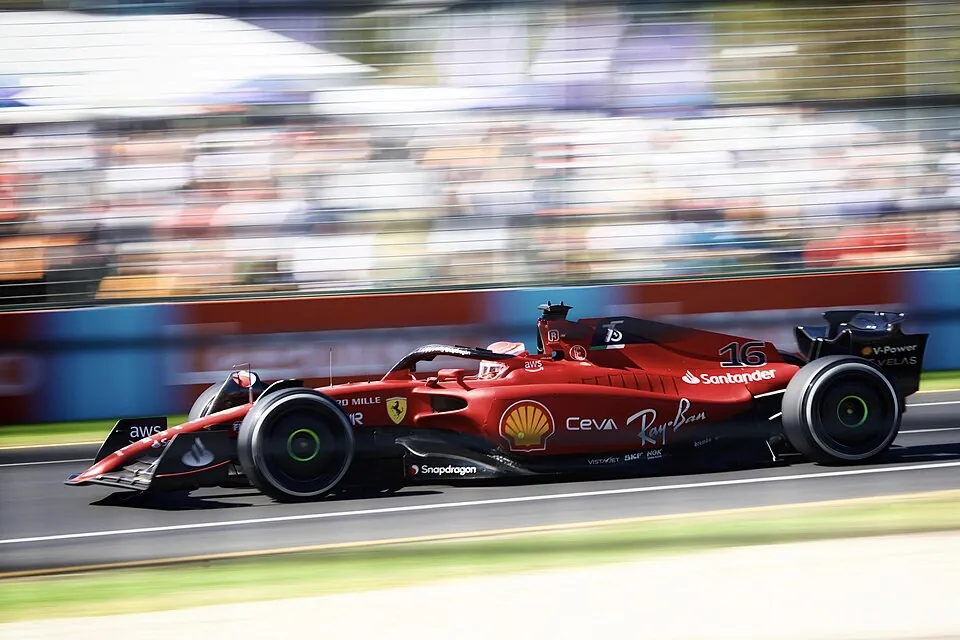
Under major technical regulations in 2022, Leclerc took early victories before reliability problems and mistakes allowed Red Bull to pull away. Ferrari captured occasional Grand Prix victories across 2023 and 2024 without sustaining full-season championship challenges. Global attention intensified when Lewis Hamilton agreed to join Ferrari alongside Leclerc. Judged by championship titles rather than isolated race victories, Ferrari continues chasing its first world title since 2008.
Sources: The History of Ferrari in Formula One.