
In this article
Championship Outcome and Race Results
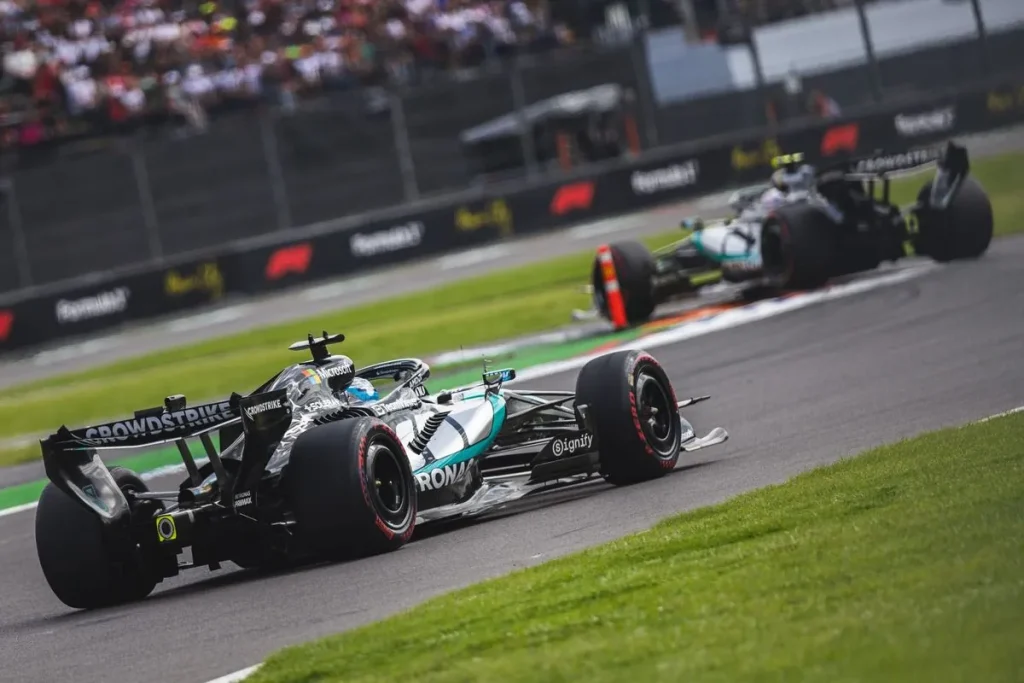
Kimi Antonelli secured the 2026 Formula 1 title four rounds before the end of the season, establishing a 130-point advantage over George Russell. Across the campaign, Antonelli took nine victories and 16 podiums, compared to three wins and eight podium finishes for Russell.
Russell had opened the 2026 regulation era by winning the opening round in Australia after three seasons alongside Lewis Hamilton. However, Russell's performance dropped relative to Antonelli, with Russell openly acknowledging that his results fell below championship contention standards across the season.
Qualifying Margins and Head-to-Head Records
Qualifying was generally the closest area between both drivers across the season. In 109 sessions able to be compared across practice and qualifying segments, Antonelli finished ahead in 58 while Russell led 51. Russell held a slight advantage in sprint qualifying sessions, but Antonelli secured seven pole positions compared to five for Russell and led 10-9 on grand prix starts.
The median gap between the pair during decisive Q3 and sprint shootout SQ3 sessions stood at 0.185 seconds in Antonelli's favour. While qualifying margins were often narrow, Antonelli produced six qualifying advantages exceeding 0.35 seconds, whereas Russell achieved a gap of that margin only once.
Race Pace and Clean-Air Performance
Race afternoons often revealed a much wider performance disparity between the two Mercedes cars. In clean-air comparisons tracking a two-second gap to cars ahead on matching compounds and equivalent tyre age, Antonelli proved faster in eight of the nine races where a meaningful run of laps could be compared, by roughly a quarter of a second per lap.
Baku provided the single exception, where Russell took victory from pole position while Antonelli recovered through traffic following a qualifying crash. Antonelli maintained superior speed across full stints, lapping faster for large portions even during Russell's wins in Australia and Austria, while Russell endured disproportionate engine performance problems at Silverstone, Spa, and Mexico.
Corner Entry Technique and Throttle Modulation
Telemetry comparisons highlighted distinct driving styles through cornering phases. Russell focused heavily on early throttle delivery off corner exits, waiting through rotation before committing aggressive throttle pedal application. Conversely, Antonelli tends to attack corner entries by carrying greater speed from initial turn-in toward the apex, trading off a fraction of acceleration on exit.
Although Russell often focuses on getting on throttle as soon as possible off corner exits, Antonelli quite often picks up the throttle earlier across slow, medium, and fast bends. Antonelli often applied throttle inputs more gently, whereas Russell waited through the turn before applying heavier throttle inputs mid-corner, particularly when accelerating away from slower corners.
Related posts
Teammate Comparisons
2024 F1 Teammate Qualifying Margins: Grid-Wide Lap-Time Gaps
Teammate Comparisons
Hamilton vs Russell: Mercedes’ 2024 Race Head-to-Head
Braking, Steering Inputs, and Corner Types
Antonelli often braked slightly later and utilised trail braking by holding the brake pedal further into the turn to stabilize the chassis while carrying higher entry velocity. A sharper initial steering input can help Antonelli rotate the car efficiently compared to Russell's smoother, later approach, allowing him to get back on power quickly enough that he tends not to lose out as much as might normally be expected.
Across 11 faster qualifying laps, Antonelli won the turn-in to apex phase 71 percent of the time, which was typically worth a few hundredths of a second net gain once exit loss was factored in. Russell matched or outperformed Antonelli through tight, short corners with reduced coasting phases, including Turn 3 in Melbourne, Turn 3 in Austria, the hairpin in China, most of Baku, and Turn 10 in Barcelona.
Chassis Dynamics and Aerodynamic Platform Shifts
The 2026 technical regulations reduced aerodynamic downforce and mechanical grip so that the car can be manipulated more, with cars moving around considerably more than previous designs. Antonelli seems able to thrive with chassis instability and sliding through brake and throttle modulation, being more proactive mid-corner while Russell coasts more waiting to be able to complete rotation, as seen through Turn 8 during Miami qualifying.
In 2025, powerful ground-effect aerodynamics generated extreme downforce that masked chassis communication and produced abrupt breakaway when grip dissipated. Antonelli felt constrained by that platform following an initial practice crash at Monza in 2024. By contrast, the 2026 car permitted greater manipulation, with Antonelli stating he can feel and almost predict the limit more.
Tyre Management and Energy Deployment Demands
Generally higher tyre pressures in 2026 have typically made the car more rear-limited, punishing drivers trying to be more aggressive on throttle off corner exits. Antonelli controlled rear tyre slip effectively, whereas Russell's laptimes dropped off faster with tyre age in nine of the 14 stints where they can be matched up directly.
Power unit energy management also penalised Russell's cornering profile on specific circuits. In the opening sector at Austin, carrying higher speed through sweeping bends allowed Antonelli to use less mid-corner throttle. Russell applied greater throttle, triggering earlier battery deployment along the short link straight, which reduced available electrical energy down the subsequent long straight.
Engineering Environment and Future Rule Shifts
Working alongside race engineer Peter Bonnington, Antonelli adapted smoothly to the revised tyre demands. Russell noted that pressing corner exits overwhelmed the rear tyres, causing lost traction and minor slides requiring throttle modulation. Mercedes team principal Toto Wolff expressed surprise at Antonelli's progress at age 20, reversing Russell's 2025 head-to-head advantage at eight common venues.
Upcoming regulatory revisions will introduce further changes to downforce levels, reduce power unit electrical sensitivity, and shift tyre balance toward front-limited behaviour. Russell believes these anticipated balance adjustments may better accommodate his driving approach, though overcoming his 2026 performance deficit requires targeted winter refinement.
Related technical guide: F1 Wing Downforce and Drag: The Aerodynamic Trade-Off.
Related reading: Hamilton vs Russell: Mercedes’ 2024 Race Head-to-Head.