In this article
Governance and Regulatory Framework
Grand Prix motorcycle racing operates under the formal framework known as the FIM Grand Prix World Championship Regulations. These sporting and technical rules govern rider conduct, outline manufacturer requirements, and define team obligations across every event. The Fédération Internationale de Motocyclisme, serving as the world governing body for motorcycle racing, ultimately oversees the formal enforcement of all championship regulations.
Regulatory updates and rule definitions fall under the authority of the Grand Prix Commission. This governing panel brings together four key stakeholders: the FIM, championship organiser and commercial rights holder Dorna Sports, the International Road Racing Teams Association representing independent racing teams, and the Motorcycle Sport Manufacturers Association representing the competing factories.
Technical Specifications and Concession Regulations
Premier class competitors race prototype machines built to millimetre precision to maximise what each factory can achieve within the regulations. Technical rules require a maximum engine displacement regulations limit of 1000cm3 alongside a minimum weight of 157kg. Each entrant receives a standard seasonal allocation of seven engines, while fuel capacity is limited to a maximum of 22 litres for a full Grand Prix race.
Under the concession system designed to ensure closer racing, competing manufacturers can be allowed a greater engine allocation per season of 9 to 10 engines, depending on previous Constructor points ranking. Concessions also govern the number of test days and test riders allowed, permitted wildcard appearances, engine specifications and freezes, permitted aerodynamic updates, and tyres supplied for testing.
Tyre Specifications and Weekend Allocations
Only tyres from the official appointed tyre supplier for each class can be used at Grands Prix and official tests. In the premier MotoGP class, Michelin serves as the official supplier, whilst Pirelli supplies Moto2 and Moto3. At each Grand Prix, two tyre specifications are available from the supplier—softer and harder compounds balancing grip versus durability. Identical tyres of each specification must be available to every rider.
The standard weekend allocation contains 22 slick tyres, partitioned into 10 front slicks and 12 rear slicks. Competitors taking part in both qualifying sessions gain one additional front slick and one additional rear slick. For wet running, riders receive 13 rain tyres, consisting of 6 front and 7 rear units. Technical officials and supplier engineers can audit tyre parameters at any moment, including operating temperatures and inflation pressures.
Trackside Marshalling and Safety Flags
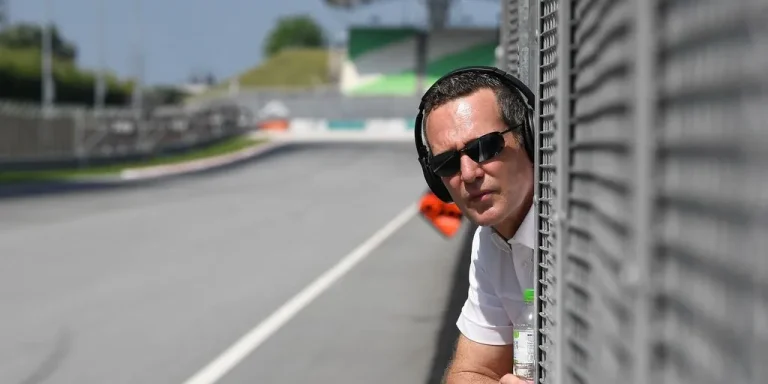
Riders must obey safety signals displayed by trackside marshals acting under instructions from Race Direction. A yellow flag indicates a dangerous situation, and riders may not pass other riders. A white flag indicates it is raining, and riders may enter pit lane to change to a bike with a wet set-up.
A red flag indicates that a race or practice session is being stopped for safety reasons; riders must slow down and return to pit lane.
Individual instructional flags convey critical instructions. Displaying a black flag alongside a rider's number directs that rider to enter their pit box immediately. A black flag with an orange disk, shown with a rider's number, advises that their bike has a technical issue which may affect their safety and others; the rider must leave the track as quickly and safely as possible.
Meanwhile, teams and crew members must behave responsibly in pit lane and trackside, following relevant protocols to maintain safety and sporting fairness.
Stewarding Structure and Penalty Types
Disciplinary and arbitration matters are the responsibility of the FIM MotoGP Stewards Panel, before a case can escalate to the FIM Appeal Stewards and then the MotoGP Court of Appeal. Stewards can apply various penalties to riders, including private or public warnings, cash fines up to €50,000, or the cancellation of a lap time in practice or qualifying.
More severe breaches prompt physical race sanctions. The panel can order a rider to surrender positions, execute a ride through penalty through pit lane without stopping, or absorb added race time penalties up to two minutes. Extreme violations can result in formal disqualification, the revocation of championship points earned from prior rounds, temporary sporting suspension, or permanent exclusion from FIM competition.
Related posts
MotoGP Rules & Flags
How MotoGP Qualifying Works: Practice Cutoffs, Q1, Q2 and Grid Rules
MotoGP Rules & Flags
How MotoGP Sprint Races Work: Rules, Points and Weekend Format
Standard Infractions and Long Lap Penalties
The Long Lap Penalty means a rider must go through an extension of the track, normally losing around 2–4 seconds, which can cost them a position, or several positions in some cases. The penalty is communicated via dashboard signals where possible and a board displayed at the start/finish line or other pre-defined area. Long Lap penalties can also be given ahead of the race start for other offences, and in conjunction with other penalties.
Standard infractions have prescribed consequences under the sporting code. Waiting for track space or a tow through slow riding draws a grid penalty, while exceeding track limits during racing triggers a Long Lap Penalty. For anticipating the start or exceeding pit lane speed limits during a Grand Prix, the standard penalty is two Long Laps. Repeatedly ignoring penalties escalates punishment to a ride-through or time penalty.
Grand Prix Weekend Schedule and Qualifying
A standard Grand Prix schedule begins on Friday morning with a 45-minute Free Practice 1 session, followed by a 60-minute timed Practice on Friday afternoon. The ten fastest competitors in Friday afternoon Practice advance directly into Qualifying 2. On Saturday morning, riders complete a 30-minute Free Practice 2 session before entering the 15-minute Qualifying 1 knockout session.
The fastest two riders from Qualifying 1 join the top ten from Friday Practice to contest the 15-minute Qualifying 2 session. Qualifying 1 fixes grid spots from 13th rearward, while Qualifying 2 settles pole position down to 12th. This combined grid sets the starting order for both Saturday afternoon's Sprint and Sunday afternoon's feature Grand Prix.
Sprint and Feature Race Formats
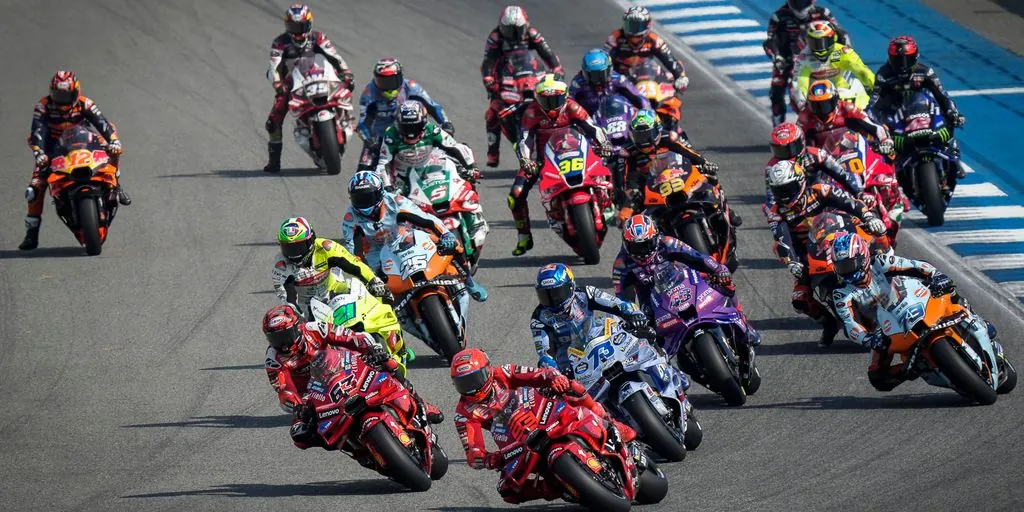
Saturday afternoon features the MotoGP Sprint, running approximately half the distance of Sunday's main event and lasting around 20 minutes. Following a brief 10-minute Warm-up on Sunday morning, the weekend culminates in the feature-length Grand Prix race on Sunday afternoon, which typically lasts around 40 minutes. Throughout every track session, riders must monitor flags, pit boards, and dashboard notifications.
Race operations rely on a clear division between Race Direction and the Stewards. Race Direction takes decisions relating to the safe running of sessions and races, communicating closely with trackside marshals. At each race weekend, the Event Management Committee (which includes the FIM Safety Officer and FIM Medical Director), Race Direction members, and the Stewards Panel keep a close eye on track action, ensuring the best safety conditions possible through key regulations.
Championship Scoring System and Points Distribution
Championship standings reward performance across both weekend races. The full Sunday Grand Prix awards points to the top 15 finishers: 25 for 1st, 20 for 2nd, 16 for 3rd, 13 for 4th, 11 for 5th, 10 for 6th, 9 for 7th, 8 for 8th, 7 for 9th, 6 for 10th, 5 for 11th, 4 for 12th, 3 for 13th, 2 for 14th, and 1 point for 15th.
Saturday Sprints award approximately half the points of the Sunday race across the top nine finishers: 12 points for 1st, 9 for 2nd, 7 for 3rd, 6 for 4th, 5 for 5th, 4 for 6th, 3 for 7th, 2 for 8th, and 1 for 9th. A rider can score a maximum of 37 points across a Grand Prix weekend, producing a potential 814 points in a 22-round season.
Championship History and Regulatory Evolution
Recent seasons demonstrate how the scoring structure rewards consistency until the final round. Francesco Bagnaia claimed the 2023 MotoGP World Championship by 39 points over Jorge Martin. In 2024, Jorge Martin secured the title by finishing ten points ahead of Bagnaia, with both championships determined at the final round.
As the motorcycle industry and global sports evolve over the years, structure, format, and regulations in MotoGP evolve alongside them. Premier class machinery shifted in 2002 when four-stroke engines replaced the 500cc formula. Organisers introduced flag-to-flag wet weather procedures in 2005. Moto2 replaced the 250cc two-stroke class with four-stroke power in 2010, followed by Moto3 replacing 125cc two-stroke machinery in 2012. Intermediate tyres were withdrawn in 2017, and weekend Sprints arrived in 2023.
The 2027 Regulatory Changes
New regulations taking effect in 2027 introduce major technical modifications to increase efficiency and sustainability while lowering top speeds. Maximum engine displacement will drop from 1000cm3 to 850cc. In parallel, standard seasonal engine allocations per rider will decrease from seven units down to six, and competing motorcycles will operate exclusively on 100% non-fossil fuel.
Chassis packaging and aerodynamics will undergo tighter restrictions under the 2027 ruleset. Permitted race fuel tank capacity will reduce from 22 litres to 20 litres, and aerodynamic bodywork will face stricter regulation. These technical adjustments aim to make Grand Prix motorcycle competition safer and more sustainable while preserving entertaining racing for fans worldwide.