In this article
Origins of the Knee-Down Posture
Before the 1970s, competitors in Grand Prix motorcycle racing rode in a much more upright style. Riders tended to stay seated squarely atop their machines, keeping their bodies relatively centred on top of the bike through corners rather than shifting weight away from the centreline.
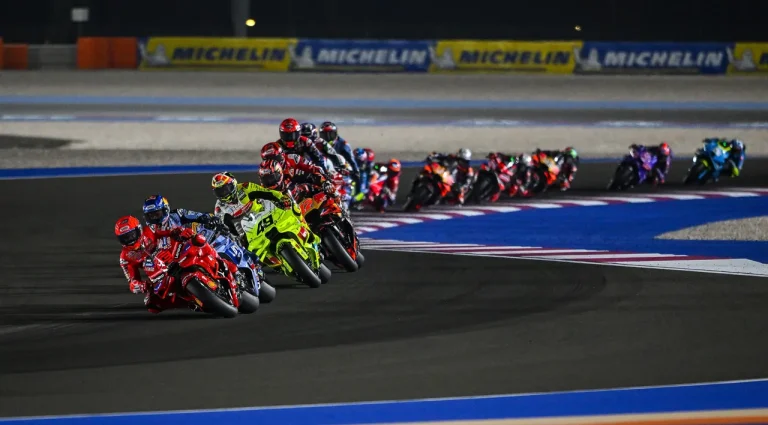
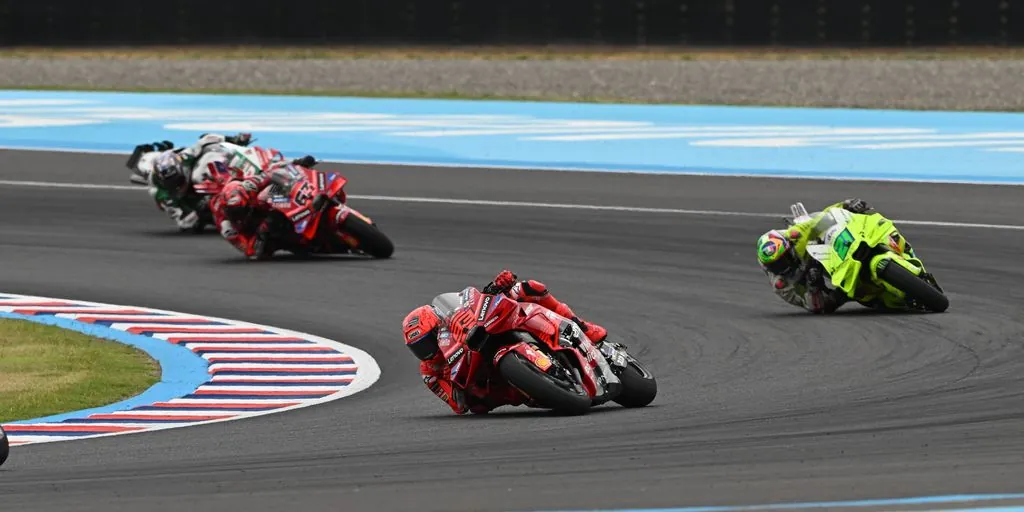
Introducing knee dragging initiated a rapid shift toward a dynamic style where riders shifted their weight outside the motorcycle's centre of gravity. Racers hung off the side of the bike, extending a knee to make contact with the track surface as a way of feeling lean angle, while also supporting weight distribution.
Pioneering the Technique in the 1970s
Three-times 500cc World Champion Kenny Roberts Sr. and 250cc World Champion Jarno Saarinen are widely credited with pioneering the technique. Saarinen drew attention for an unusual riding posture that involved extending his knee, and Roberts is reported to have witnessed the Finnish racer in action in the United States during the early 1970s.
Inspired by Saarinen and drawing on his background in dirt-track racing, Roberts took the method further by placing his knee directly onto the asphalt to stabilise the motorcycle. The American rider's progression and development of the cornering technique quickly became widely adopted across the paddock.
Evolution and Modern Technical Aids
Since Roberts announced the arrival of knee dragging in MotoGP in the 1970s, the technique has not only become the norm but has evolved further. More reliable and advanced levels of tyre grip and enhanced motorcycle performance have allowed riders to grow in confidence with leaning the bike further and getting their knee down.
The introduction of knee sliders provided a welcomed safety measure and signalled the normalisation of the practice. More recently, extreme lean angles enabled by improved aerodynamics, electronics and tyres have allowed riders to push limits to the extreme while using body positioning to even greater effect.
Related posts

Riding Style Changes Across Eras
Through the decades, several riders became synonymous with knee dragging during Grand Prix competition. Mick Doohan was a notable proponent of the technique through the 1990s, while Valentino Rossi served as another prominent example through the 2000s as riding styles developed.
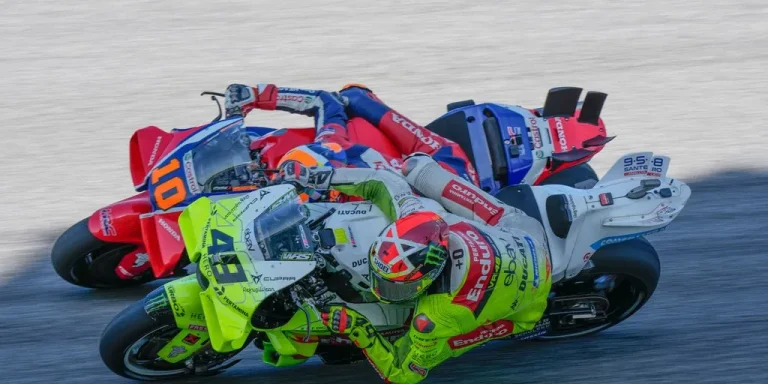
From the 2010s onward, Marc Márquez took the approach further with an aggressive riding style that popularised getting the elbow down onto the track. Rossi had also used this elbow-down technique, but Márquez helped establish dragging both knee and elbow as a modern benchmark for extreme cornering angles.
Sensory Feedback and Corner Speed
Dragging the knee provides key practical benefits for riders navigating corners. In a practical sense, extending the knee acts as a sensor to gauge what level of lean angle riders have reached and how much margin remains, functioning as an integrated, real-time feedback tool throughout turns.
Dragging the knee also helps riders reduce lean angle when needed. In some corners, this means riders can carry speed through the apex of a corner better, or it can result in faster cornering without as much loss of grip.
Balance Manipulation and Front-End Saves
Being able to use their body weight to play with the motorcycle's centre of gravity is essential for a rider when managing a machine through countless changes in direction, shifts in speed, and power through a race. By being able to move their body around the bike, riders are able to manipulate machine reactions and performance, and getting their knee down helps them achieve this.
Riders have also saved countless crashes through the years thanks to having their knee in contact with the track surface. The added leverage and stability offered by dragging the knee, combined with counteracting centrifugal force, can help riders recover from momentary losses of front-end grip.
Slide Control and Safety Equipment
Knee dragging provides an important safety element by adding leverage and stability that can help make motorcycle sliding more predictable. Given the sheer speed and power of MotoGP machines, riders experience substantial movement beneath them, with the motorcycle sliding from side to side under deceleration and braking.
A knee down can help stabilise a minor slide as riders correct a momentary loss of grip, which television cameras regularly capture when riders save front-end slides. The use of knee sliders, providing extra protection and resistance, alongside advancements like ultra-responsive crash airbag leathers, offers riders the best protection possible when even a knee or elbow cannot avoid a crash.
Circumstances Where Knees Stay Off the Asphalt
Dragging a knee is not always necessary for riders on every section of a racetrack. On tight, low-speed corners, a rider generally does not need to drop a knee because the machine is not leaned over enough, depending on the apex of the corner.
When track conditions are wet, riders tend to use a more upright posture and lean the bike less, which reduces the need for dragging a knee. Similarly, when accelerating down straights, tackling chicanes, or navigating situations where little to no lean angle is present, knee dragging is completely unnecessary.