In this article
Introduction and the Upright Era of Motorcycle Racing
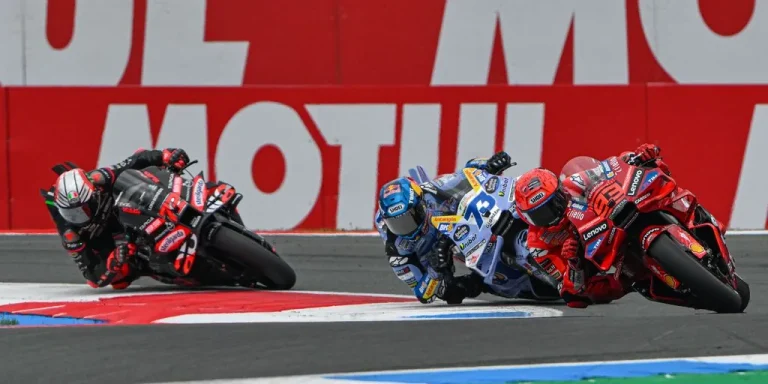
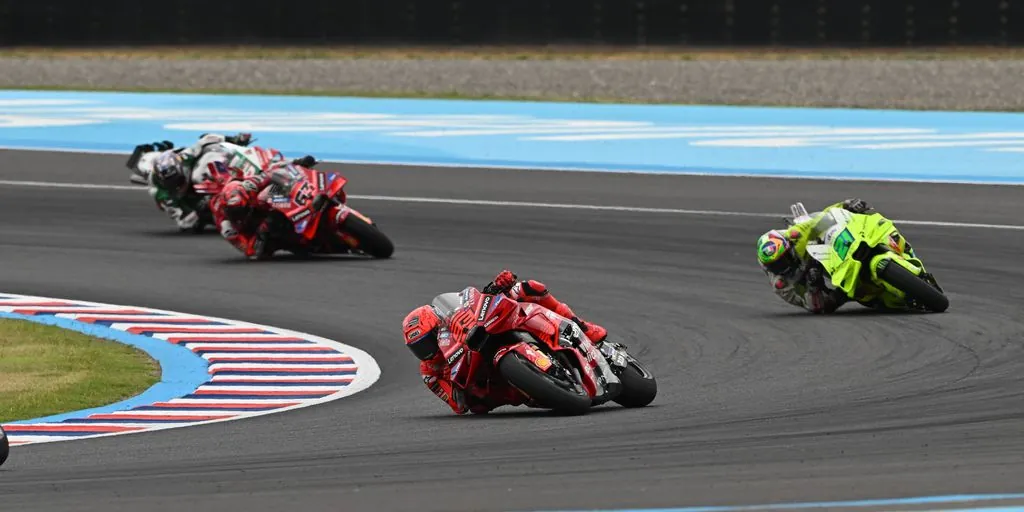
Spectators watching MotoGP routinely observe riders leaning at extreme angles while skimming their knees across the tarmac. This dramatic riding posture forms one of the most recognizable displays of motorcycle racing skill, but it also fulfills crucial functional purposes regarding vehicle balance, safety, and lap time execution.
Before the technique took hold in the 1970s, competitors steered through corners with an upright posture. Riders remained positioned relatively centrally atop the motorcycle saddle, keeping body alignment tightly symmetrical with the machine rather than leaning inward toward the road surface.
Weight Transfer and the Center of Gravity Shift
The introduction of knee dragging fundamentally altered Grand Prix competition by encouraging a dynamic riding posture. Competitors began hanging off the side of their machinery, deliberately shifting physical mass outward from the motorcycle's inherent center of gravity.
By moving off the saddle and protruding an inside knee toward the track, racers gained a tactile method for feeling exact lean angles. Beyond serving as a lean gauge, the lowered leg provided secondary structural support and improved weight distribution across both wheels.
Pioneering the Technique: Saarinen and Roberts
Two historical champions receive widespread credit for establishing this riding style: Finnish 250cc World Champion Jarno Saarinen and American three-times 500cc World Champion Kenny Roberts Sr. Saarinen attracted international recognition for an unusual stance that extended his knee outward through turns. Roberts observed Saarinen competing in the United States during the early 1970s.
Inspired by Saarinen's method and drawing upon his personal dirt-track racing background, Roberts advanced the posture further. The American competitor dropped his knee directly onto the track asphalt to stabilize the motorcycle. Roberts's refined technique proved remarkably effective, driving swift adoption among rival riders across Grand Prix paddocks.
Evolution Through Decades of Improved Grip
Following its introduction by Roberts, dragging the knee became universal across motorcycle racing. Enhanced machine performance and increasingly reliable tyre grip fostered rider confidence, enabling competitors to lean bikes further toward the pavement than previous generations could contemplate.
Specific champions became synonymous with the technique across differing eras. Australian Mick Doohan championed knee-dragging mastery throughout the 1990s, while Italian icon Valentino Rossi became a leading proponent during the 2000s.
Related posts
Elbow Dragging and Aerodynamic Enhancements
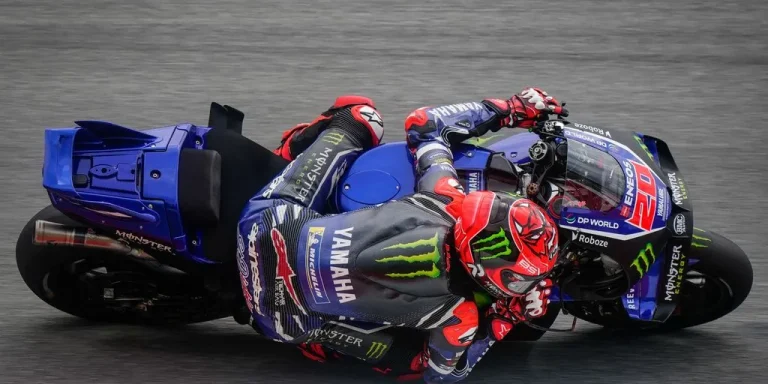
From the 2010s to present day, Marc Márquez expanded cornering boundaries by popularizing dragging an elbow along the pavement, a method Valentino Rossi had previously employed. Readers can explore why MotoGP riders drag their elbows to examine the technical progression toward modern lean angles.
These aggressive angles stemmed from continuous motorcycle developments. Innovations spanning advanced aerodynamics, refined electronics, and superior tyre construction allowed riders to push performance envelopes by using dynamic body positioning to maximum effect.
Sensory Feedback and Cornering Dynamics
In competitive practice, an extended knee operates as a physical sensor. Touching asphalt gives the racer immediate real-time feedback regarding current lean angle, instantly communicating how much cornering clearance remains under the chassis.
Being able to use body weight to adjust the bike's centre of gravity is essential for a rider managing a motorcycle through countless changes in direction, speed, and power. By being able to move their body around the bike, riders are able to manipulate the bike's reactions and performance, and getting their knee down helps them achieve this. Dragging the knee also helps riders reduce lean angle when needed.
In some corners, this means they can carry speed through the apex better, or it can result in faster cornering without as much loss of grip.
Deceleration Slides and Front-End Crash Saves
Because modern Grand Prix prototypes produce immense speed and power, machines experience substantial lateral movement, sliding side to side under deceleration and braking. The added leverage and stability offered by dragging a knee, along with counteraction against centrifugal force, can help riders recover from momentary losses of front-end grip and can help make motorcycle sliding more predictable.
Television broadcasts often feature close-ups during Grands Prix in which riders save front-end slides by using their knee or elbow to regain control. Having a knee down can help stabilise a minor slide as riders correct a momentary loss of grip.
Safety Equipment and Protective Sliders
The introduction of knee sliders not only provided an additional safety measure for MotoGP riders, but also signaled the normalization of the practice. The use of knee sliders can provide that extra protection and resistance.
When even a knee or elbow cannot avoid a crash, modern equipment can offer riders the best protection possible. The use of knee sliders alongside technological advances in protective leather suits and safety tech, such as ultra-responsive crash airbag inflation, offer riders the best protection possible during an incident.
When Riders Do Not Drag Their Knees
It is not always necessary for competitors to drag their knee during a race. On tight, low-speed corners, a rider generally does not need to get their knee down because the motorcycle will not be leaned over enough, depending on the apex of the corner they are navigating.
When riding on straights, taking corners such as chicanes, and in other situations where little to no lean angle is in play, knee dragging is completely unnecessary. Furthermore, when conditions are wet, riders tend to ride with a more upright riding posture and therefore lean the bike less, which in turn reduces the need for dragging their knee when cornering.
Fifty Years of Cornering Technique
The evolution and wide adoption of the technique over the past 50 plus years in MotoGP has seen knee dragging become an integral part of the sport. It serves as an important technique for riders to help control their bikes, gain feedback on critical areas such as lean angle and grip, and help avoid crashes in certain circumstances.
As the technique has matured, riders have integrated knee dragging into their riding styles and strategic approaches throughout every Grand Prix. They continually seek the fine balance between control, safety, and performance, managing extreme cornering lean angles on modern racing machinery.