In this article
Abrasion Resistance and Track Fall Protection
Grand Prix motorcycle racers reach speeds exceeding 350 km/h while cornering at extreme lean angles up to 65 degrees from vertical. Because riders constantly operate at these physical limits, falls occur regularly during competition. Custom leather racing suits serve as a vital piece of safety equipment alongside the rider helmet, gloves, and boots.
When an accident happens, racers typically land on tarmac or tumble across gravel run-off areas outside the circuit limits. A leather suit shields human skin from violent friction and extreme surface heat during prolonged high-speed slides. Without this tough external shield, sliding across rough pavement would cause debilitating road rash and tissue injuries.
Natural Leather and Structural Materials
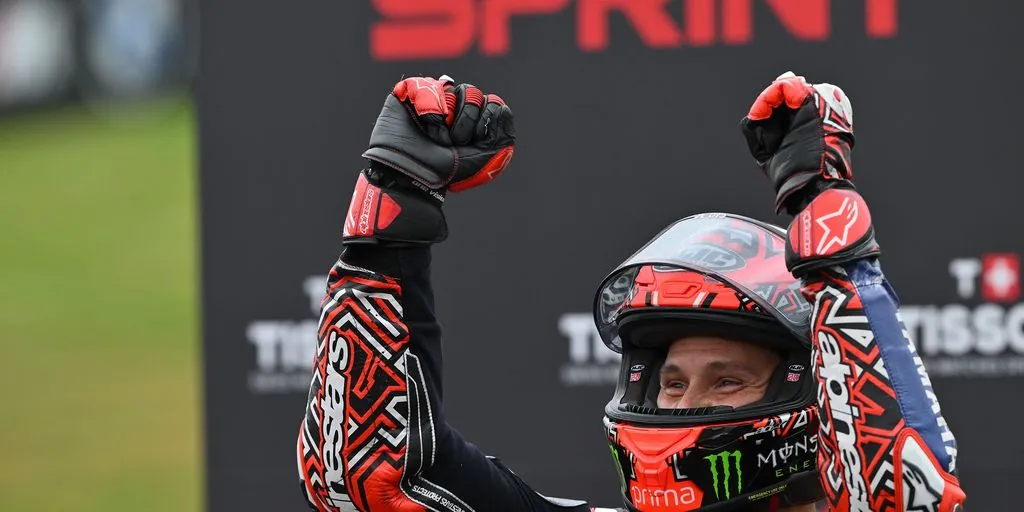
Specialist manufacturers such as Alpinestars and Dianese build modern MotoGP race suits around premium natural leather. Kangaroo hides and high-grade cowhide form the outer layer because suit makers consider natural leather superior to synthetic or textile fabrics. Leather provides unmatched abrasion resistance, breathable flexibility, and structural durability that resists tearing during high-speed slides.
Reinforcement areas and stretch panels incorporate synthetic Aramid and Kevlar fibres. These accordion panels give riders crucial elasticity while maintaining exceptional tensile strength. Combining tough leather shells with flexible composite panels yields a lightweight, aerodynamic garment capable of withstanding severe tarmac abrasion without splitting apart under mechanical strain.
Integrated Impact Armour and External Sliders
Underneath the outer leather hide, manufacturers insert rigid armour and impact protectors engineered from thermoplastic polyurethane and carbon fibre. Technicians position these protective inserts over critical skeletal areas, including the chest, shoulders, back, elbows, forearms, knees, shins, and coccyx. Tailoring the suit snugly prevents these composite protectors from shifting out of position when an impact occurs.
External hard sliders mounted on the knees, elbows, and shoulders serve dual functional purposes. Beyond offering sacrificial wear protection against track contact, these replaceable parts allow riders to skim kerbs and asphalt surfaces safely. Brushing sliders against the ground gives competitors tactile sensory feedback to gauge radical lean angles and balance, linking with knee dragging technique during maximum cornering attack.
Related posts
Autonomous Airbags and Aerodynamic Speed Humps
The aerodynamic speed hump on the upper back first appeared in premier racing during the late 1980s and early 1990s to cut aerodynamic drag as riders tuck low over the handlebars. Today, suit suppliers like Alpinestars, Dianese, and Spidi utilise this hump as a functional compartment. It houses data-logging hardware, drink hydration bladders with helmet feeding hoses, and electronic airbag controllers.
Integrated airbag vests are standard safety equipment in modern Grand Prix leathers. Onboard sensors including gyroscopes, accelerometers, and GPS track motion anomalies to detect crashes. Within roughly 0.045 seconds of incident initiation, a firing mechanism drives a pin through a metal seal on a carbon dioxide cylinder. The rapid gas release inflates cushions protecting the rider upper back, shoulders, chest, ribcage, and neck from blunt impacts.
Tailored Ergonomics and Cockpit Mobility
MotoGP suits are much more sophisticated than standard consumer road-riding apparel. Former racer and 1998 British Grand Prix winner Simon Crafar notes that standard street gear is loose and baggy across the chest when crouching into an aggressive racing tuck, while bunching tightly across the back to restrict arm reach. Fighting stiff, ill-fitting leather demands excessive physical stamina and rapidly induces rider fatigue.
To solve this biomechanical problem, competition leathers feature pre-curved sleeves, a shortened front torso, ventilation zones, and strategic accordion panelling. Although walking upright in paddock areas feels uncomfortable, the pre-shaped silhouette aligns flawlessly once crouched over clip-on clip handlebars. This targeted cut allows broad steering movement while holding protective cups tight against joints during sudden violent tumbles.
Accident Statistics and Crash Survival Realities
Grand Prix competition carries persistent collision risks. The 2024 season recorded 335 falls across 20 Grand Prix events, averaging 16.8 spills per race weekend, compared to 358 crashes across 20 rounds in 2023. Whenever bikes slide out, competitors depend entirely on layered gear to absorb impacts against run-off gravel beds, rival machinery, or perimeter boundaries.
The protective efficacy of these suits proved vital during the 2025 Qatar Grand Prix. Reigning 2024 World Champion Jorge Martin suffered a severe crash while nursing existing pre-season ailments. Martin sustained right posterior rib fractures, chest trauma, thoracic contusions, and pneumothorax, sidelining him across the opening half of his title defense. Martin publicly acknowledged on social media that without his advanced protective leather suit, the outcome could have been much worse.
Related reading: Why MotoGP Riders Wear Leather Suits: Safety, Materials and Tech.