In this article
What Enables MotoGP Bikes to Corner at Extreme Speed
Cornering at elite Grand Prix speed requires combining balance, braking technique, cutting-edge technology, on-board electronics, highly tuned rider skills, and tyre grip. The ultimate limit on how fast a MotoGP bike can corner is the grip from slick racing tyres. When traction runs out, the bike slides or crashes.
Finding ways to improve all of these factors is how riders can get a competitive edge, pushing that limit while staying safe and being able to do it lap after lap.
Hanging Off for Machine Control and Tyre Grip
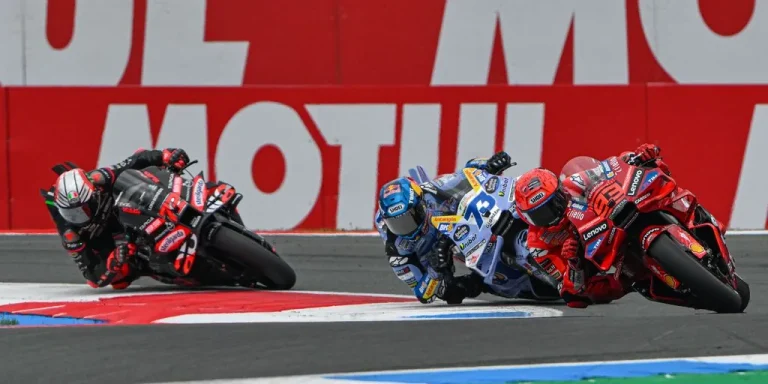
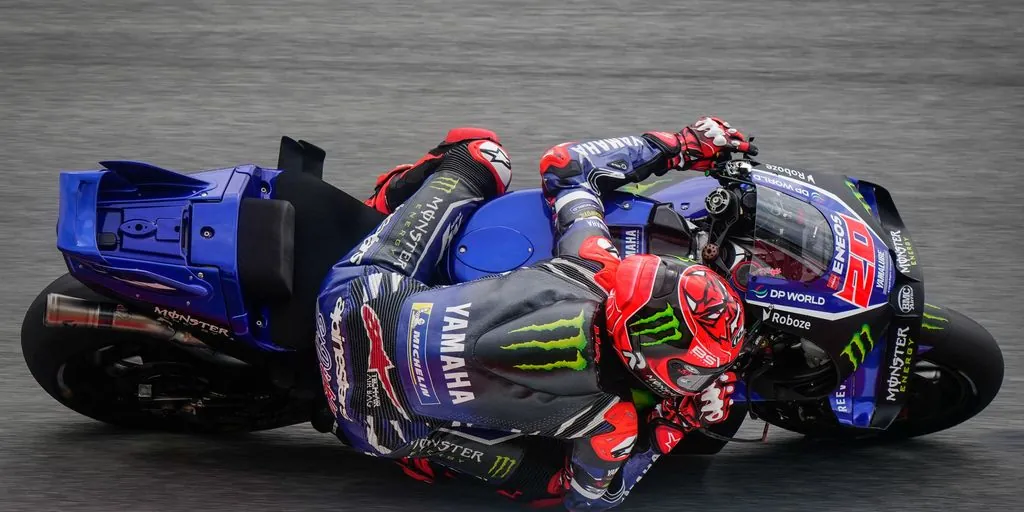
A rider's body position plays a central role in generating grip and steering authority through a corner. By hanging off the side of the machine, riders use their own body weight to reduce the motorcycle's required lean angle. Riders do this because lean angles are important, but leaning the bike too far over risks losing enough traction between the tyres and the track to maintain grip.
Riders often use tactics like dangling a leg outward or shifting their weight forward across the machine to help improve balance and stability. Adopting these physical movements often keeps competitors in better control of the front end as they guide the bike through corners.
Lean Angle Calculations and Balance
Cornering pace depends on balancing optimal lean angle against the danger of leaning too far and losing grip. Indeed, MotoGP riders can lean their bikes at extreme angles of up to 65 degrees when cornering. Competitors maintain their balance by brushing knees, elbows, and even shoulders against the track surface to stay in control. Understanding why MotoGP riders drag their elbows highlights how these contact points preserve machine stability.
When travelling at extreme angles and high velocities, smooth operation is essential. Any sudden control action—twisting the throttle, squeezing the brakes, or turning the handlebars—threatens to upset chassis balance. Executing every control action smoothly is essential at extreme angles to avoid upsetting the balance of the machine.
Related posts
Trail Braking and Corner Entry Technique
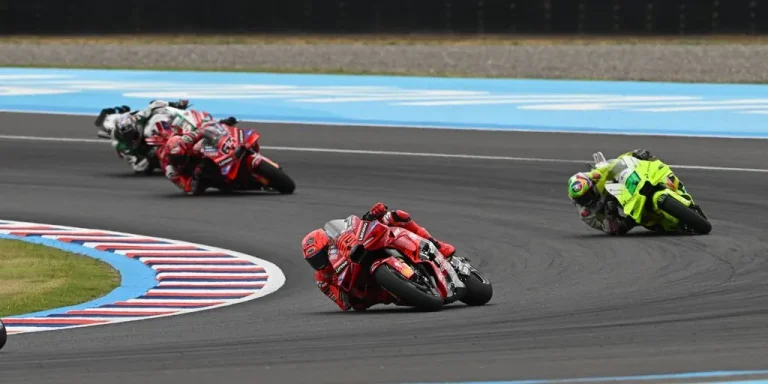
Knowing when to brake going into a corner is another skill that riders need to master, especially as they brake as late as possible so as to avoid losing too much speed. Grand Prix competitors employ trail braking, gradually releasing the brakes while leaning the machine into the bend. This gradual release keeps weight firmly loaded on the front tyre, increasing available rubber grip and helping the bike pivot smoothly into the apex.
Front-end control remains critical during late-braking corner entries. If there is too much brake pressure, the front tyre can lose grip. However, if there is not enough brake pressure, that shortfall will impact the bike's ability to corner quickly through the turn.
Throttle Application and Corner Exit Acceleration
Corner exit and knowing when to start throttling to accelerate again is another crucial calculation for how riders turn fast. Starting to throttle too soon can break traction and cause the rear wheel to spin. Conversely, starting too late impacts the bike's ability to build up high speed on the straight and could cause the rider to lose their position.
The ideal moment to apply the throttle arrives when the rider begins picking the bike back up from its maximum lean angle. It is crucial to make sure throttling is done smoothly, otherwise that will cause the bike to lose its grip against the asphalt.
Treadless Slick Tyres and High Operating Temperatures
Grand Prix machinery relies on specialized slick tyres lacking tread grooves, maximizing rubber surface contact with the circuit to generate immense grip. These purpose-built tyres function at elevated lean angles and very high operating temperatures. Selecting the correct tyre compound and managing wear across the race distance are critical tasks for maintaining speed and safety.
Electronic Rider Aids for Corner Stability
Modern racing motorcycles feature sophisticated electronic systems to aid cornering and protect riders. On-board traction control curbs rear wheelspin during acceleration, while engine braking control stabilizes the chassis while decelerating toward a bend. Additionally, bikes have anti-wheelie systems to keep the front wheel on the ground when accelerating out of corners, as the rider could otherwise quickly lose control. These systems support safety without replacing rider skill and courage.
Aerodynamic Downforce and Fairing Winglets
Aerodynamics plays an important role in cornering stability by generating downforce. Specialized aerodynamic downforce and winglets keep the motorcycle planted against the circuit surface. This added aerodynamic stability grants riders the confidence needed to enter corners rapidly, hold stable lines, and exit turns under high power.
Racecraft Tactics and Trajectory Choices
Strategic racecraft heavily shapes cornering lines during a race. Strategy can depend on where the rider is in the race when approaching a corner, including how aggressive or defensive they want to be. Keeping a tighter line can work as a defensive strategy by blocking off opponents. Taking a wider, faster line can work for overtaking on corner entry or corner exit, depending on the strategy.
Competitors must also evaluate nearby bikes, which can affect grip and visibility.
Managing Changing Conditions and Risk Factors
Pushing cornering techniques to the limit on every single lap means it only takes one miscalculation or element of bad luck to cause a crash. Across a race, many factors can change that affect cornering, such as tyre temperatures, wear and tear, track conditions, fuel usage, and rider fatigue. Managing these changing variables through rider technique, technological precision, and appropriate tyre management enables competitors to corner at extraordinary speeds.