At a glance
- The F1 virtual safety car uses FIA timing targets instead of putting a Safety Car on track.
- Drivers usually cannot overtake, and pit entry during a VSC must be for changing tyres.
- Racing resumes at the green signal, 10–15 seconds after the “VSC ENDING” message.
In this article
The F1 virtual safety car, or VSC, slows racing without a physical Safety Car leading the field. Drivers must meet FIA reference times until the green signal allows them to race again.
The race director can deploy it when competitors or officials face danger and double-waved yellow flags are needed. However, the circumstances must fall short of requiring the physical Safety Car. The 2026 FIA Sporting Regulations, Section B, Issue 09, dated 1 October 2026, set out this procedure in B5.12.
How the F1 virtual safety car delta works
Race Control sends “VSC DEPLOYED” to the teams, and the FIA light panels display “VSC”. Drivers then slow to meet the minimum times set by the FIA electronic control unit, or ECU.
The rule uses marshalling sectors: the sections of track between FIA light panels.
Drivers must stay above the minimum time at least once in each marshalling sector. They must also meet the requirement at both safety car lines and when the panels change to green. Looking only at a complete lap would miss those separate checks.
The dashboard delta shows how a driver compares with the reference time. A positive value means the car is behind that reference schedule. In its 2023 explanation of delta controls, the FIA described dashboard displays and radio tones that help drivers follow it.
The FIA’s 2023 explanation also describes a separate reference for double-yellow zones. In that system, the displayed delta resets on entering the affected zone. Earlier time loss therefore does not excuse excessive speed beside an incident. This is a local safety control, not a fixed percentage reduction that applies to every part of every lap.
Drivers must still avoid dangerous, erratic or unnecessarily slow driving. A positive dashboard figure does not remove those responsibilities. The stewards can penalise a failure to meet the minimum time; the rules provide several possible sanctions rather than one automatic penalty.
Related posts
When can a driver overtake?
Drivers normally cannot pass another car on track while the VSC operates. However, B5.12.2 allows four exceptions:
| Situation | When passing is allowed |
|---|---|
| Entering the pits | After reaching the first safety car line, a driver may pass a car staying on track. |
| Leaving the pits | Before reaching the second safety car line, a driver may pass an on-track car. |
| Within the pit areas | Cars in the pit entry road, pit lane or pit exit road may pass cars also in those areas. |
| Another car has a problem | A driver may pass a car that slows with an obvious problem. |
The last exception does not require the other car to stop completely. Nor does it give drivers permission to pass a healthy car simply because they could catch it while following their own delta.
F1 virtual safety car pit stops: what is allowed?
B5.12.3 permits pit entry during the VSC procedure for the purpose of changing tyres. That wording concerns why the driver enters; it does not say that every unrelated service becomes permissible.
Strategy is a separate question. With rivals moving more slowly on track, a stop can cost less relative time than it would during normal racing. However, the car still has to travel through the pit lane and receive service.
The saving depends on the circumstances, including when the VSC ends. If racing resumes while a car is still in the pits, rivals can accelerate before it rejoins. There is no universal “free stop” or fixed number of seconds saved.
Our guide to pit-lane duration and net pit loss explains the timing distinction. The decision also needs the tyre benefit and likely rejoining position, as our extra-stop calculation shows.
What ends the VSC period?
The race director sends “VSC ENDING” when it is safe to withdraw the procedure. Between 10 and 15 seconds later, the FIA panels turn green and drivers can race immediately. They must still meet the minimum-time requirement at that change.
The message therefore warns drivers of the restart; it is not permission to accelerate whenever their own countdown expires. They follow the green signal. Once it appears, they do not need to reach the Control Line before overtaking resumes.
Do the laps count, and are the gaps frozen?
Laps completed under the VSC count toward the race distance. The procedure slows the race rather than stopping its lap count.
The field does not have to form a queue behind a physical Safety Car. However, that does not guarantee identical time gaps before and after the deployment. Pit stops can change the order. Local double-yellow restrictions can also affect cars differently, a consequence the FIA acknowledges in its delta explanation.
Drivers and teams still need to check the gaps after green.
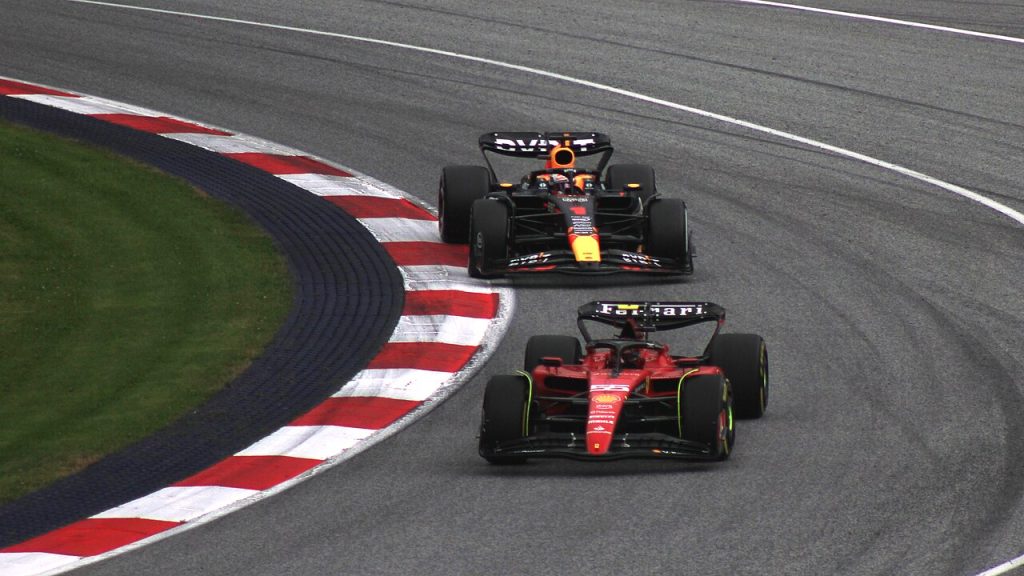
Image credit: Representative image; not a photograph of the reported event. · Lukas Raich · Own work · Modifications: None; Wikimedia thumbnail size · Image source · CC BY-SA 4.0