In this article
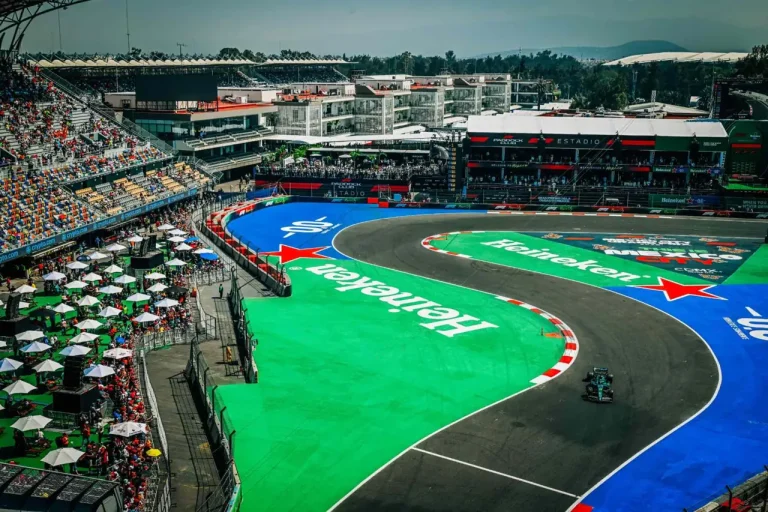
Formula 1 power units face an unprecedented technical trial at the 2026 Mexico City Grand Prix, representing the first occasion the current engine formula competes at extreme elevation. Held at the Autódromo Hermanos Rodríguez, 2,285 metres above sea level, the event presents an atmospheric density approximately 25 percent lower than standard sea-level environments. This rarefied air severely complicates internal combustion engine performance, forcing the turbocharger to spin at substantially higher rotational speeds to supply the airflow necessary for combustion. Honda has cautioned that operating compressors under these distinct atmospheric conditions creates a formidable hurdle for every engine supplier on the grid.
MGU-H Removal Heightens Turbocharger Load
The operational challenge is heightened by the 2026 technical regulations, which eliminated the Motor Generator Unit – Heat (MGU-H). In preceding seasons, that electrical apparatus supported turbocharger operation and alleviated turbo lag, while also generating boost pressure at idle. Deprived of that assistance, the turbocharger has to perform its task under heavier mechanical load. Speaking in an interview involving Formula.hu, Honda chief engineer Shintaro Orihara explained that competing in Mexico for the first time with the new power units presents challenges across the grid, as every engine manufacturer must adapt to the special conditions without previous MGU-H support.
Performance Risks and Rotational Limits
Orihara emphasized that performance difficulties are unlikely to remain confined to the Japanese marque, projecting that all engine manufacturers could struggle with power delivery. To draw adequate air volume into the combustion chambers, turbochargers must spin near the boundaries of their permitted rotational speed range. While turbochargers possess hard mechanical limits that could impair functionality if exceeded, Honda is not currently alarmed about reaching that ceiling. Nevertheless, Orihara acknowledged that in a "worst case" scenario, teams might need to impose operational restrictions on their engines to protect integrity, though simulation data indicates electrical energy deployment should proceed without major disruption.
Related posts


Managing Turbo Lag from Austin to Mexico
Turbo lag has already represented a prominent engineering headache for Honda across recent rounds. The delay between throttle application and the arrival of boost surfaced acutely following the introduction of the manufacturer's second ADUO upgrade package after race weekends in Spain and Azerbaijan. Honda implemented counteractive measures at the United States Grand Prix in Austin, where Orihara verified that the revisions successfully reduced throttle latency, providing encouragement heading into Mexico. Continuing development at its Sakura facility in Japan, Honda conducted specialized simulation tests reproducing Mexican conditions, though laboratory trials cannot wholly replicate live circuit running.
Engine Output and Aerodynamic Shifts
The unique environmental conditions at high elevation will also alter power unit behavior and car dynamics across the wider field. Internal combustion outputs are expected to drop below normal benchmarks, potentially penalizing packages engineered with smaller turbocharger architectures, such as Ferrari's power unit. Weakened internal combustion performance can subsequently influence battery management, impacting energy harvesting and electrical output. Simultaneously, the thin air reduces aerodynamic downforce, compromising tyre grip through the corners, while diminished air resistance lowers overall drag, requiring less energy to achieve high acceleration down straightaways.
Crucial Learning in Free Practice
With untried machinery tackling extreme atmospheric pressures, opening free practice sessions will prove vital for competitors seeking baseline data and viable setup compromises. Orihara noted that observing turbocharger behavior on circuit will provide critical insights for Honda and rival manufacturers alike, marking a pivotal moment of discovery as the 2026 power units face their highest-altitude test of the year.
Sources: Minden F1-es motor szenvedhet Mexikóban?.